
Screw Compressors for Industrial HVAC/R Systems: Applications, Benefits, and Replacement Considerations
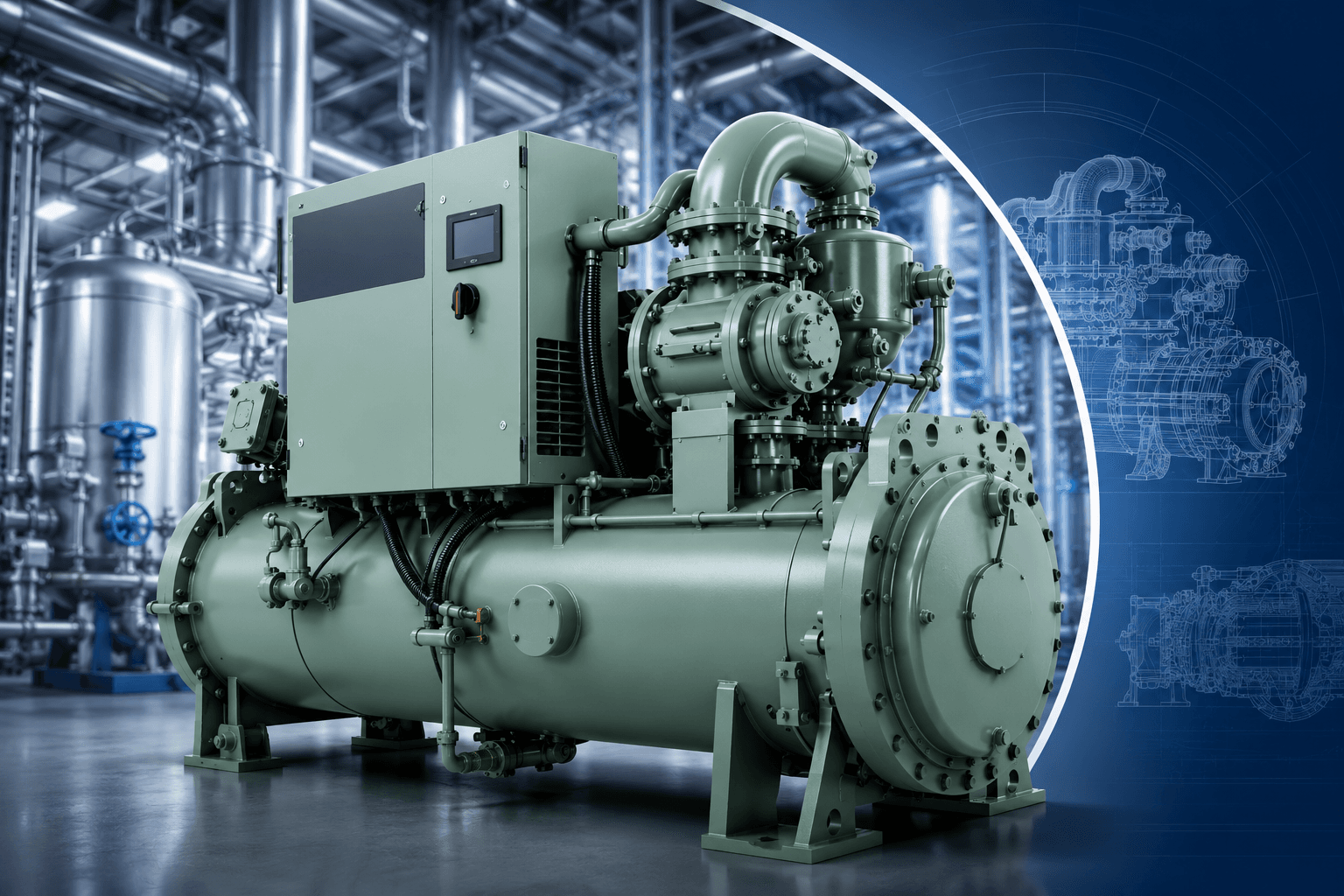
Learn how screw compressors support demanding industrial HVAC/R systems, including chillers, cold storage, manufacturing, and process cooling. Explore screw compressor benefits, efficiency, common causes of failure, Trane models, and when a remanufactured screw compressor may be the right replacement.
Industrial HVAC and refrigeration systems operate under demanding conditions. Manufacturing plants, cold storage warehouses, food processing facilities, distribution centers, and other large operations may require cooling around the clock. At this scale, compressor selection can have a major effect on reliability, capacity, energy consumption, and operating costs.
For many of these applications, a screw compressor provides the capacity and continuous operation required for demanding industrial HVAC/R systems.
Compressors Unlimited carries commercial HVAC compressors for large-scale applications, including screw compressors used in demanding cooling systems.
Understanding how screw compressors work, where they are commonly used, and what to consider when replacement becomes necessary can help HVAC/R contractors, engineers, and facility managers make better equipment decisions.
What Is a Screw Compressor?
A screw compressor is a positive-displacement compressor that uses rotating helical rotors to compress refrigerant vapor.
In a typical twin-screw compressor, two intermeshing rotors turn inside the compressor housing. Refrigerant vapor enters through the suction side and becomes trapped between the rotors and housing.
As the rotors continue turning, the available space decreases. The refrigerant pressure rises until the compressed vapor exits through the discharge side.
This continuous rotary compression process makes screw compressors particularly useful in applications requiring substantial cooling capacity and long operating cycles.
Where Are Screw Compressors Used?
Screw compressors are commonly found in larger commercial and industrial cooling applications, including:
- Industrial refrigeration systems
- Chillers
- Cold storage warehouses
- Food processing facilities
- Manufacturing plants
- Distribution facilities
- Process cooling
- Large commercial buildings
- Refrigeration plants
The correct screw compressor depends on the specific load, refrigerant, temperature requirements, equipment design, and operating conditions.
For facilities where cooling is essential to production or product preservation, compressor reliability becomes especially important. A compressor failure can interrupt production, threaten temperature-sensitive inventory, and create expensive downtime.
Contractors looking for a replacement can search the Compressors Unlimited compressor inventory by manufacturer, capacity, application, and compressor type.
Why Are Screw Compressors Used in Industrial HVAC/R?
Several characteristics make screw compressors well suited to demanding industrial applications.
High Cooling Capacity
Industrial systems can require significantly greater refrigeration capacity than smaller commercial applications.
Screw compressors can accommodate large cooling loads, making them practical for chillers, centralized cooling systems, industrial refrigeration, and process cooling.
Extended Operating Cycles
Cold storage, food processing, manufacturing, and process cooling applications may require refrigeration for long periods or around the clock.
Screw compressors are commonly used where extended operating cycles and dependable capacity are essential.
Continuous Rotary Operation
The rotary compression process provides smooth, continuous refrigerant compression when the compressor and surrounding system are operating correctly.
This characteristic makes screw compressor technology particularly useful for facilities that depend on consistent cooling rather than intermittent operation.
Capacity Control
Industrial cooling loads are rarely constant. Production schedules change, outdoor temperatures fluctuate, product loads vary, and building demands rise and fall.
Depending on the compressor and system design, capacity can be controlled to better accommodate changing loads.
Effective capacity control can also play an important role in reducing unnecessary industrial HVAC energy consumption.
Trane Screw Compressors Available From Compressors Unlimited
Trane is one of the primary screw compressor manufacturers represented in the Compressors Unlimited inventory. Current listings include models from the CHHN, CHHB, CHHP, and CHHT series.
Examples include:
- Trane CHHN*35
- Trane CHHN*40
- Trane CHHN*50
- Trane CHHN*60
- Trane CHHB*70
- Trane CHHB*85
- Trane CHHB*100
- Trane CHHP*085
- Trane CHHP*120
These model links give contractors researching a specific compressor a direct path to relevant inventory information.
Individual availability can change, so contractors should also check the complete Trane compressor inventory when sourcing a replacement.
Why Screw Compressor Efficiency Depends on the Entire System
A properly selected screw compressor cannot compensate indefinitely for poor HVAC/R system conditions.
A screw compressor operating with excessive condensing pressure or abnormal suction conditions may work harder and consume more energy than necessary.
Efficiency can be affected by:
- Dirty condensers
- Inadequate condenser water flow
- Refrigerant charge problems
- Poor evaporator performance
- Refrigerant restrictions
- Incorrect controls
- Improper capacity management
- Oil system problems
Facility managers concerned about industrial HVAC energy use should evaluate more than compressor amperage.
Operating pressures, temperatures, system load, capacity control, and heat-transfer conditions provide a much more complete picture of compressor performance.
Correcting these conditions can improve efficiency while reducing unnecessary stress on the compressor.
Oil Management Is Critical for Screw Compressors
Oil plays an important role in many screw compressor designs. Depending on the compressor, oil may contribute to lubrication, sealing, cooling, and other aspects of operation.
Technicians should monitor:
- Oil level
- Oil pressure
- Oil temperature
- Oil separator performance
- Filter condition
- Oil quality
- Refrigerant and oil compatibility
Compressors Unlimited normally supplies mineral oil or POE oil based on the known application for a particular compressor model when an oil charge is appropriate.
However, the customer does not always provide complete application information. The installing contractor determines the refrigerant and is responsible for confirming that the refrigerant is compatible with the oil.
Some compressors may also be shipped without an oil charge after testing. Compressors cannot be shipped with an oil charge via air freight.
It's important to always verify correct oil management during installation and commissioning.
What Causes an Industrial Screw Compressor to Fail?
Screw compressors are designed for demanding service, but they are not immune to system-related problems.
Lubrication Problems
Insufficient lubrication or an oil system problem can damage bearings and other internal surfaces. Identify the source of the lubrication problem before installing a replacement compressor.
High Discharge Temperatures
Excessive discharge temperatures can degrade oil and place additional thermal stress on compressor components.
Possible causes include high compression ratios, poor condenser performance, abnormal suction conditions, and other system problems.
Contamination
Moisture, acid, debris, and other contaminants can shorten compressor life.
When a screw compressor fails, technicians should determine whether contamination is present before installing the replacement.
Electrical Problems
Voltage imbalance, loose connections, motor problems, and other electrical conditions can contribute to compressor damage.
Electrical conditions should be inspected and verified before startup.
Operation Outside the Intended Envelope
A screw compressor that continually operates outside its approved pressure, temperature, or load conditions can experience accelerated wear and premature failure.
The important lesson is that a failed compressor may be the result of another problem within the HVAC/R system. Replacing the compressor without determining why it failed can put the replacement at risk.
What Should You Check Before Replacing a Screw Compressor?
A failed industrial screw compressor should never be treated as an isolated component.
Before replacement, contractors should investigate:
- Why the original compressor failed
- Refrigerant condition
- Oil condition
- Evidence of acid or contamination
- Electrical supply
- Condenser performance
- Evaporator performance
- System controls
- Operating pressures and temperatures
The replacement compressor should also be matched carefully to the existing application.
If the exact model is uncertain, contractors can use the Compressors Unlimited Replacement Compressor Finder to search using the manufacturer, existing model number, or compressor specifications.
Can Industrial Screw Compressors Be Remanufactured?
Yes. Many commercial and industrial screw compressors can be remanufactured, depending on the manufacturer, model, application, and condition of the compressor core.
Professional remanufacturing involves considerably more than repairing the component that caused the immediate failure.
A comprehensive process involves disassembly, inspection, evaluation of critical components, replacement or restoration of components as required, reassembly, and testing.
This is particularly important in industrial HVAC/R applications because the cost of a second compressor failure can extend far beyond the price of the compressor itself. Downtime can interrupt operations, affect inventory, and increase labor costs.
Compressors Unlimited remanufactures Trane and York screw compressors for commercial and industrial HVAC/R applications.
When Does a Remanufactured Screw Compressor Make Sense?
A remanufactured screw compressor can be particularly attractive when an industrial facility faces:
- Long OEM-equipment lead times
- A difficult-to-source compressor
- An aging but otherwise serviceable system
- Significant downtime costs
- Budget limitations
- A need to extend existing equipment life
Replacing an entire chiller or industrial refrigeration system because of one failed compressor can require a substantial capital investment.
When the surrounding equipment remains viable, installing a properly matched remanufactured screw compressor may allow the facility to restore cooling without the immediate expense and disruption of complete equipment replacement.
The key is to evaluate the condition of the entire system and correct the cause of the original failure before putting the replacement compressor into service.
Frequently Asked Questions About Industrial Screw Compressors
What is a screw compressor used for in HVAC?
Screw compressors are commonly used in larger HVAC and refrigeration applications, including chillers, industrial refrigeration, cold storage, food processing, manufacturing, and process cooling.
How does a screw compressor work?
A twin-screw compressor uses intermeshing helical rotors. Refrigerant vapor becomes trapped between the rotors and housing. As the available space decreases, refrigerant pressure increases before the vapor exits through the discharge side.
What Trane screw compressors does Compressors Unlimited carry?
Current inventory includes models from the Trane CHHN, CHHB, CHHP, and CHHT series. Individual model availability can change, so contractors should check the current Trane inventory when sourcing a replacement.
Are screw compressors energy efficient?
Screw compressors can perform efficiently when properly selected and operated. Actual energy efficiency depends on system load, capacity control, refrigerant conditions, operating pressures, heat transfer, maintenance, and overall system performance.
What causes a screw compressor to fail?
Possible causes include lubrication problems, contamination, excessive discharge temperatures, electrical problems, abnormal operating pressures, and operation outside the compressor's intended envelope.
Can an industrial screw compressor be remanufactured?
Many industrial screw compressors can be remanufactured depending on their manufacturer, design, condition, and application. Trane and York screw compressors are among the types Compressors Unlimited remanufactures.
Finding the Right Screw Compressor for an Industrial HVAC/R System
Industrial cooling applications leave little room for guesswork. A replacement screw compressor must match the refrigerant, capacity, electrical requirements, operating conditions, and equipment design.
Just as importantly, technicians should determine why the original compressor failed before installing its replacement.
Compressors Unlimited specializes in commercial and industrial HVAC/R compressors, including remanufactured Trane and York screw compressors. Remanufactured compressors from Compressors Unlimited are backed by a 12-month limited warranty.
Before ordering, gather complete compressor model information and as much application information as possible. Contractors can browse the current compressor inventory or request a compressor quote for help identifying an appropriate replacement.
Correct compressor selection, proper installation, and addressing the cause of the original failure can help protect the replacement and keep critical industrial HVAC/R equipment operating reliably.