
Inside the Compressor Remanufacturing Process: What Technicians Should Expect From a Quality Rebuild
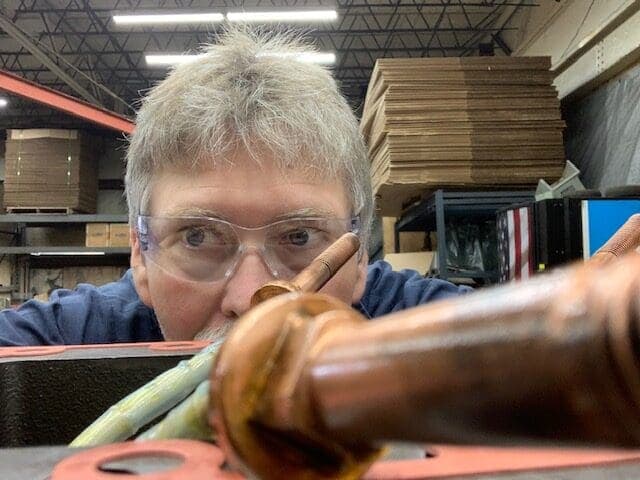
When a commercial HVAC or refrigeration compressor fails, time is everything. Technicians and contractors need reliable solutions that get systems back online quickly without sacrificing performance or quality. While new OEM compressors can face long lead times and higher prices, remanufactured commercial compressors have become a preferred choice for professionals who want efficiency, dependability, and value.
But not all remanufacturing is created equal. Understanding what actually happens inside a quality remanufacturing process helps HVAC/R professionals make confident decisions and protect their customers’ systems for years to come.
What Does “Remanufactured” Really Mean?
A remanufactured compressor isn’t just repaired or refurbished. It’s completely rebuilt to meet or exceed OEM specifications. This process restores the unit to “like-new” condition through comprehensive teardown, machining, replacement, and testing.
By contrast, rebuilt compressors may only receive partial repairs, leaving worn components untouched and performance inconsistent.
Step 1: Core Evaluation and Disassembly
The process starts when a failed compressor core arrives at a remanufacturing facility. Skilled technicians inspect the unit to ensure it’s a viable candidate for rebuilding.
Key Steps in Evaluation
- Inspect for cracks, damage, or corrosion in the crankcase or housing.
- Verify model and serial numbers to confirm correct parts and specifications.
- Record any signs of electrical or mechanical failure for root cause analysis.
Once approved, the compressor is completely disassembled. Every component, from valves to bearings, is removed, tagged, and inspected individually.
Step 2: Deep Cleaning and Preparation
All parts undergo industrial-grade cleaning to remove oil, carbon deposits, scale, and other contaminants.
- Surfaces are cleaned with high-pressure solvents.
- Interior components may be bead-blasted or ultrasonically cleaned.
- Cooling passages and oil channels are flushed to ensure unrestricted flow.
Clean components provide a fresh foundation for precise machining and assembly later.
Step 3: Machining and Component Restoration
A reputable remanufacturer re-machines and restores parts to OEM tolerances. This is what truly separates remanufactured compressors from basic rebuilds.
Typical Machining Includes:
- Reboring cylinders and honing surfaces.
- Recutting valve seats.
- Balancing crankshafts and rotors.
- Refacing valve plates.
Precision machining ensures tight tolerances that prevent leaks, maintain efficiency, and extend compressor life.
Step 4: Replacing Wear Components
Every wear component is replaced with new, high-quality parts.
Commonly Replaced Components
- Bearings and seals.
- Gaskets, rings, and O-rings.
- Suction and discharge valves.
- Connecting rods and pistons if necessary.
At Compressors Unlimited, all new components meet or exceed OEM specifications, ensuring consistent performance under heavy load.
Step 5: Electrical Testing and Rewinding
Electrical integrity is critical for long-term compressor reliability. Each motor stator and rotor is tested for insulation resistance, winding balance, and short circuits.
If issues are found, motors are rewound or replaced to match the unit’s voltage and phase requirements.
This step prevents costly field failures and ensures the compressor performs safely under load.
Step 6: Reassembly and Calibration
After machining and part replacement, the compressor is carefully reassembled by trained technicians.
Each torque setting, clearance, and seal is verified during assembly. Internal lubrication systems are checked for proper flow. Once complete, the compressor is prepared for final quality testing.
Step 7: Pressure and Load Testing
Before any remanufactured compressor leaves the facility, it undergoes rigorous testing to simulate real-world conditions.
Testing Includes:
- Leak and pressure verification.
- Oil circulation and flow checks.
- Suction and discharge pressure validation.
- Performance under simulated load.
At Compressors Unlimited, our commercial hvac/r compressors are tested for proper oil and refrigerant compatibility before shipping. Units intended for air or ocean freight are shipped without an oil charge, per safety regulations, and receive a nitrogen charge to preserve internal integrity.
Step 8: Finishing, Labeling, and Packaging
Once the unit passes final testing, it’s painted, labeled, and packaged for shipment. The model and configuration details are clearly marked to make installation simple.
Compressors are then packaged for either domestic or international delivery, with a full nitrogen charge for LTL or ocean freight and a light nitrogen charge for air shipment.
Each unit includes documentation of testing results and a limited warranty to back its performance.
Why the Remanufacturing Process Matters
Remanufacturing delivers multiple advantages for technicians, contractors, and facility managers:
1. Quality and Consistency
Each unit is rebuilt to the same standard, something field rebuilds can’t guarantee.
2. Faster Turnaround
Remanufactured compressors are often in stock, avoiding the long lead times associated with new OEM units.
3. Lower Cost
Remanufactured compressors typically cost 30-50 percent less than new OEM units while offering comparable performance.
4. Environmental Benefits
Reusing the compressor core and metal components reduces waste and lowers carbon emissions, aligning with sustainability goals.
Real-World Example: Carrier 06E Remanufacturing
A building maintenance contractor servicing a hospital discovered a failed Carrier 06ET275610 compressor. A new OEM replacement had an 8-week lead time.
By partnering with Compressors Unlimited, they sourced a remanufactured Carrier 06E configured for R-407C refrigerant and 460V power. The unit was shipped the next day and installed over the weekend, avoiding downtime for critical medical equipment.
The remanufactured unit delivered the same performance as a new compressor at nearly half the cost.
Information You Should Know Before Purchasing Your Remanufactured Compressor
Q1: How long does a remanufactured compressor last?
When built and installed correctly, remanufactured compressors will last as long as new OEM units.
Q2: Are remanufactured compressors safe to use in critical applications?
Yes. Reputable remanufacturers follow OEM testing standards to ensure safety and reliability for hospitals, data centers, and industrial facilities.
Q3: What’s the warranty on a remanufactured compressor?
Compressors Unlimited provides a 12-month limited warranty against manufacturing defects on every unit.
Q4: How do I know if my compressor is a good candidate for remanufacturing?
If the housing and crankcase are intact, the compressor is often a viable core for rebuilding. The best way to truly know is to contact one of our technicians so we can evaluate the compressor core.
Key Takeaway for HVAC/R Technicians
A quality remanufacturing process goes far beyond cleaning and repainting. It combines engineering precision, electrical testing, and craftsmanship to deliver compressors that perform like new.
When technicians choose a remanufactured compressor from Compressors Unlimited, they get:
- OEM-level reliability.
- Proven testing and documentation.
- Faster delivery and better pricing.
- Support from experts who understand Carrier, Copeland, Trane, York, and Bitzer systems.
As you evaluate your compressor’s status as well as your operation budget, consider a remanufacturing commercial HVAC/R Compressor. Not only are they reliable, with minimum lead time, but they will also make a significant positive impact on your budget.