
Screw Compressor Technology in Industrial HVAC
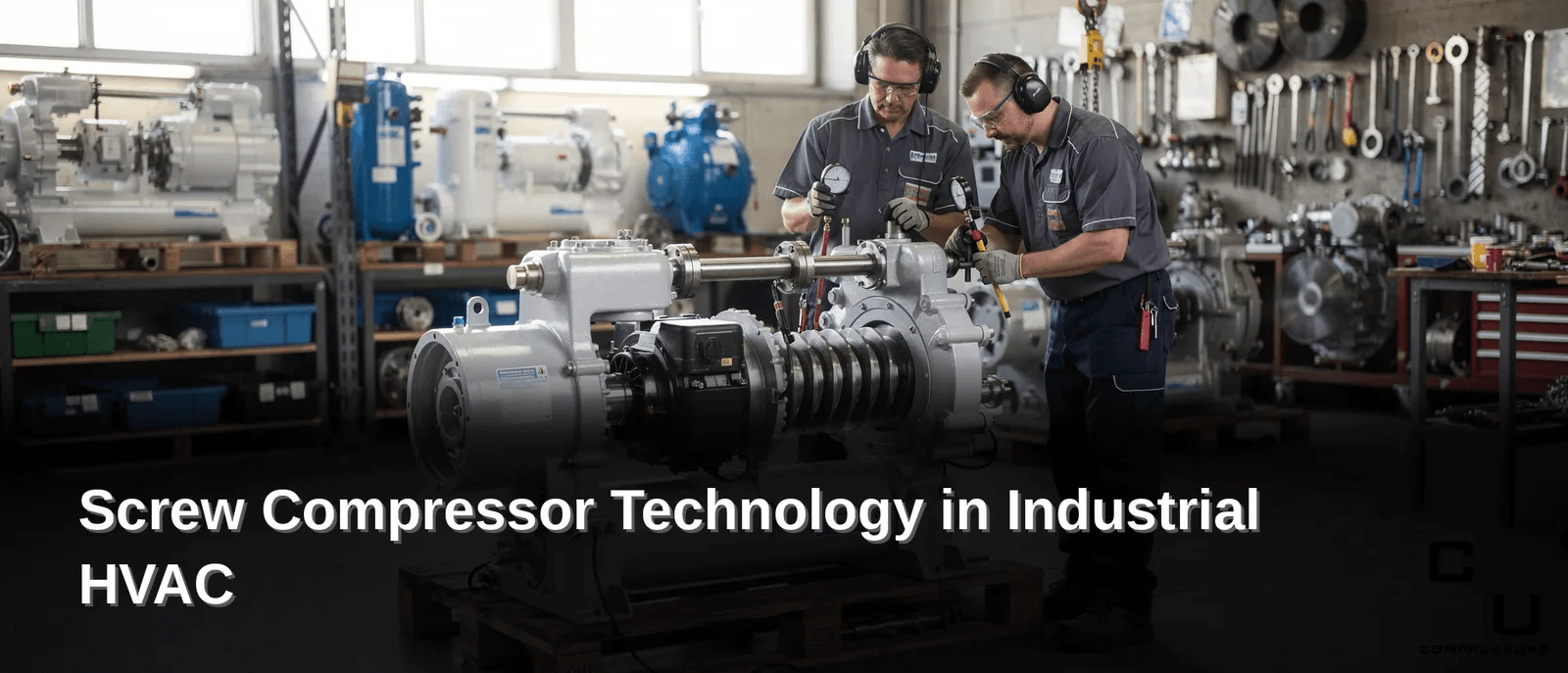
Explore screw compressor technology for industrial HVAC and refrigeration. Compressors Unlimited delivers high-performance rotary screw systems nationwide.
Screw Compressor Technology in Industrial HVAC And Refrigeration
Screw compressors power industrial HVAC and refrigeration systems requiring continuous heavy-duty operation. Compressors Unlimited, remanufacturing units since 1985 in Dallas, TX, backs every remanufactured unit with a 12-month limited warranty and accepts cores like Carrier and Trane through its Core Exchange Program.
Screw compressors deliver reliable, continuous-duty performance for industrial HVAC and refrigeration systems. Compressors Unlimited remanufactures units accepting York DXS and Carrier 06T, and offers HotShot delivery nationwide and international shipping.
Screw compressors use two intermeshing helical rotors, spanning 3hp to over 500hp, for continuous industrial HVAC and refrigeration duty. Facility managers rely on these units for durability, high-volume airflow, and consistent performance across demanding commercial refrigeration environments requiring dependable, sustained compression.
Key Takeaways
- Screw compressors handle demanding industrial refrigeration and HVAC applications better than traditional reciprocating piston compressors.
- Compressors Unlimited accepts York DXS and Carrier 06T cores through their exchange program for Screw Compressors, providing savings and reliability for our customers.
What Makes a Screw Compressor Different?
A screw compressor operates with two intermeshing helical rotors instead of a piston and cylinder. Engineers chose this design to overcome the mechanical limitations of reciprocating compressors, which depend on repeated piston movements and are susceptible to wear at valve and piston contact areas. The continuous rotary motion eliminates the stop-start cycle, resulting in more stable gas compression and fewer parts that can fatigue.
Today, reciprocating and screw-type units account for the vast majority of compressors operating in commercial refrigeration and cooling systems. Facility managers evaluating replacement equipment will almost certainly be choosing between these two families. Both designs share one core function: compressing refrigerant gas so it can move heat out of a large industrial-sized building or process. The mechanism differs sharply, even though the underlying job stays the same.
Why Are Screw Compressors Gaining Popularity in HVAC/R?
Adoption of the rotary screw compressor has climbed steadily across commercial HVAC and refrigeration applications. Plant operators favor the design for its continuous-duty capability. Its ability to handle demanding, high-volume loads without the mechanical stress cycles reciprocating units experience.
How Does a Screw Compressor Compare to a Reciprocating Unit?
Feature
Reciprocating Compressor
Screw Compressor
Motion type
Piston, back-and-forth
Rotor, continuous rotation
Historical role
Original, most established design
Developed to address reciprocating limitations
Common status
Widely used today
Widely used today
Core function
Compresses refrigerant gas
Compresses refrigerant gas
For industrial refrigeration screw applications specifically, that continuous rotary action supports the sustained, high-capacity performance large-scale cooling processes demand. Facility teams weighing equipment options should treat this mechanical distinction as the starting point for any selection decision.
How Does a Rotary Screw Compressor Actually Work?
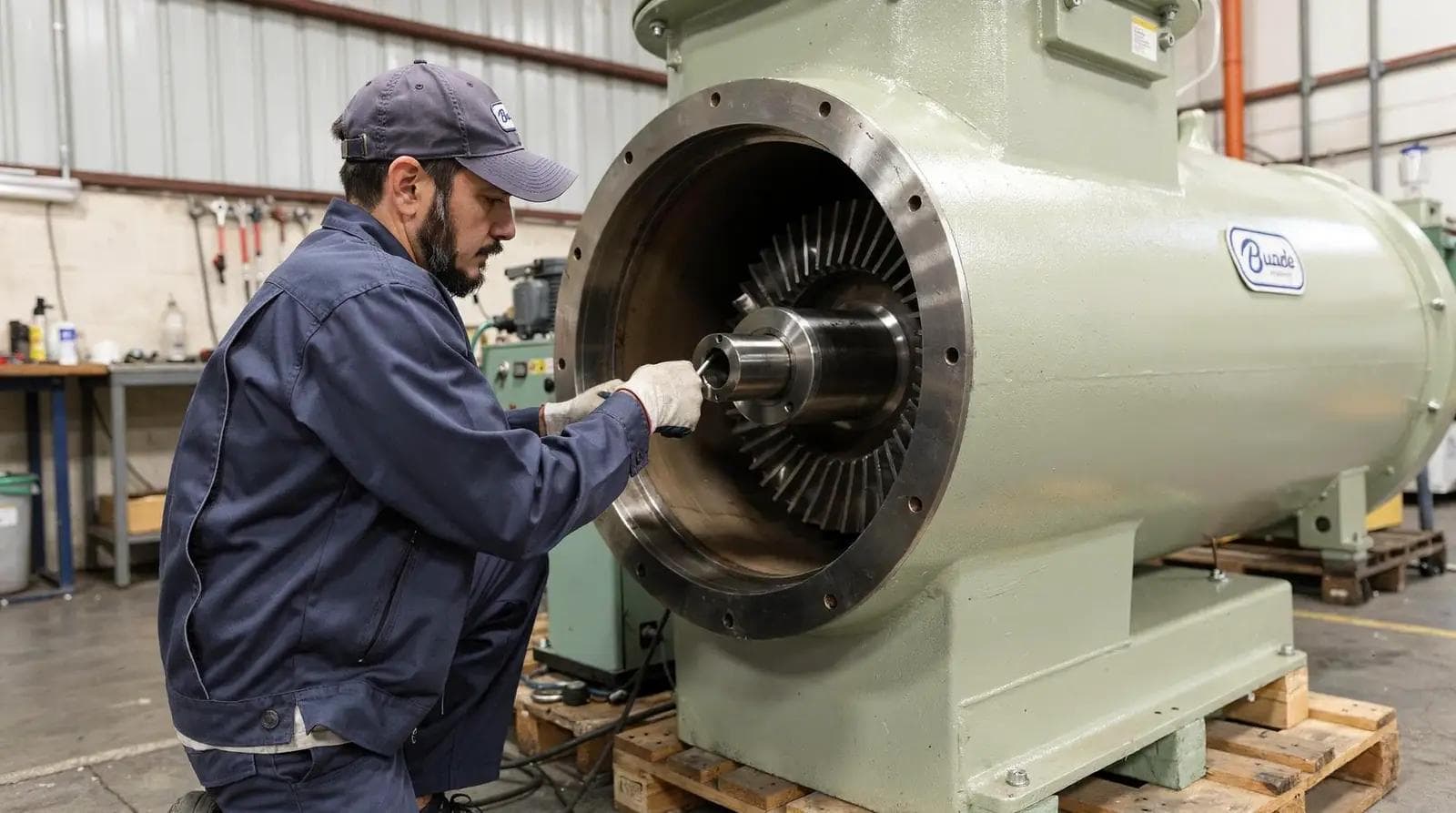
Two intermeshing rotors inside a sealed stator housing perform the entire compression process. A conventional rotary screw compressor relies on this rotor pair, mounted in a housing fitted with a dedicated intake port and discharge port. Facility managers evaluating equipment for continuous-duty applications need to understand this mechanism. The design directly affects reliability and long-term maintenance costs.
What makes the rotors spin without touching?
The rotors, called helical screws, interlock with tight precision while spinning in opposite directions at high speed. Their geometry keeps the surfaces close enough to seal gas pockets but far enough apart to avoid metal-on-metal contact. That balance is what allows a screw compressor to run continuously without the wear patterns common in piston-driven equipment.
How does gas move through the compressor?
Airflow follows a fixed path from intake to discharge. One rotor draws gas through the intake port, which includes a filter to block airborne particles from entering the compression chamber. Both rotors then work together, pushing that gas steadily toward the discharge side.
Compression happens because of a shrinking cavity, not a piston stroke:
- Gas enters the intake port and gets trapped in a pocket between the rotor threads.
- The pocket travels along the axial length of the screws.
- The space between the rotors narrows gradually as the pocket approaches discharge.
- The trapped gas compresses into a progressively smaller chamber, raising its pressure before release.
This continuous, rotary motion is precisely why an industrial refrigeration screw platform delivers steady output under sustained load. Plant operators managing high-volume cooling demand benefit from that consistency. Fewer moving parts translate to fewer failure points across long production cycles.
Why Choose Screw Compressors for Industrial Refrigeration?
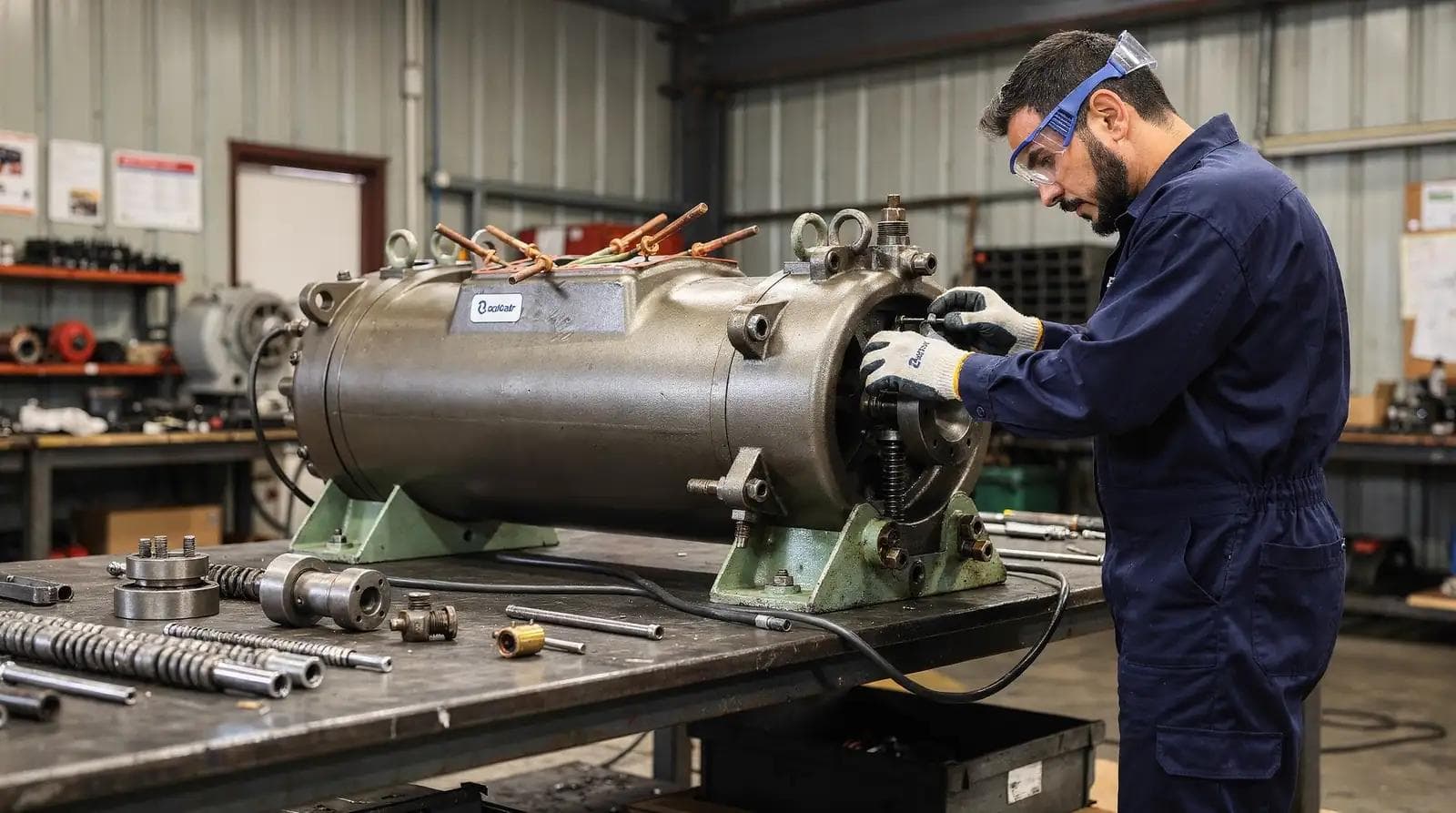
Continuous performance and high-volume refrigerant flow make the rotary screw compressor the standard for demanding cooling operations. Facility managers who depend on around-the-clock cooling cannot afford unplanned downtime. Industrial refrigeration operations that run 24 hours a day place enormous stress on compression equipment. Reciprocating designs often fall short under that load. A screw compressor built for continuous operation eliminates the repeated start-stop cycling that shortens component life elsewhere in the system.
Coverage extends across a wide horsepower range. Rotary screw units serve commercial, industrial, and light manufacturing settings, spanning roughly 3 horsepower up to more than 500 horsepower. That range allows plant operations leaders to match compressor capacity precisely to load requirements, whether cooling a single process line or an entire distribution facility.
What role does the compressor play in a refrigeration system?
The compressor functions as the heart of the refrigeration system. It acts as the pump that circulates refrigerant through the entire cycle, making cooling possible at every downstream stage.
Why does compressor reliability matter so much?
Because the compressor makes refrigerant available to every other process, the whole cooling cycle depends on it. When other system components fail or degrade, the compressor compensates by working harder. And its service life shrinks as a result. Selecting a rugged industrial refrigeration screw unit reduces that compounding wear.
Key advantages for continuous-duty applications include:
- Sustained high-volume refrigerant flow without cycling fatigue
- Scalability across a 3 to 500-plus horsepower range
- Reduced mechanical strain compared to units forced to overcompensate for failing components
These characteristics explain why rotary-screw technology now forms the backbone of modern industrial refrigeration infrastructure you can find at most Dairy Farms.
What Pressure and Capacity Ranges Are Available?
Capacity spans from small commercial units to heavy industrial systems, with pressure ratings reaching as high as 1,100 psi (76 bar) for specialized applications. Facility managers who mismatch compressor capacity to load risk short-cycling, wasted energy, and premature equipment failure. Understanding the available ranges prevents costly oversizing or undersizing errors before procurement even begins.
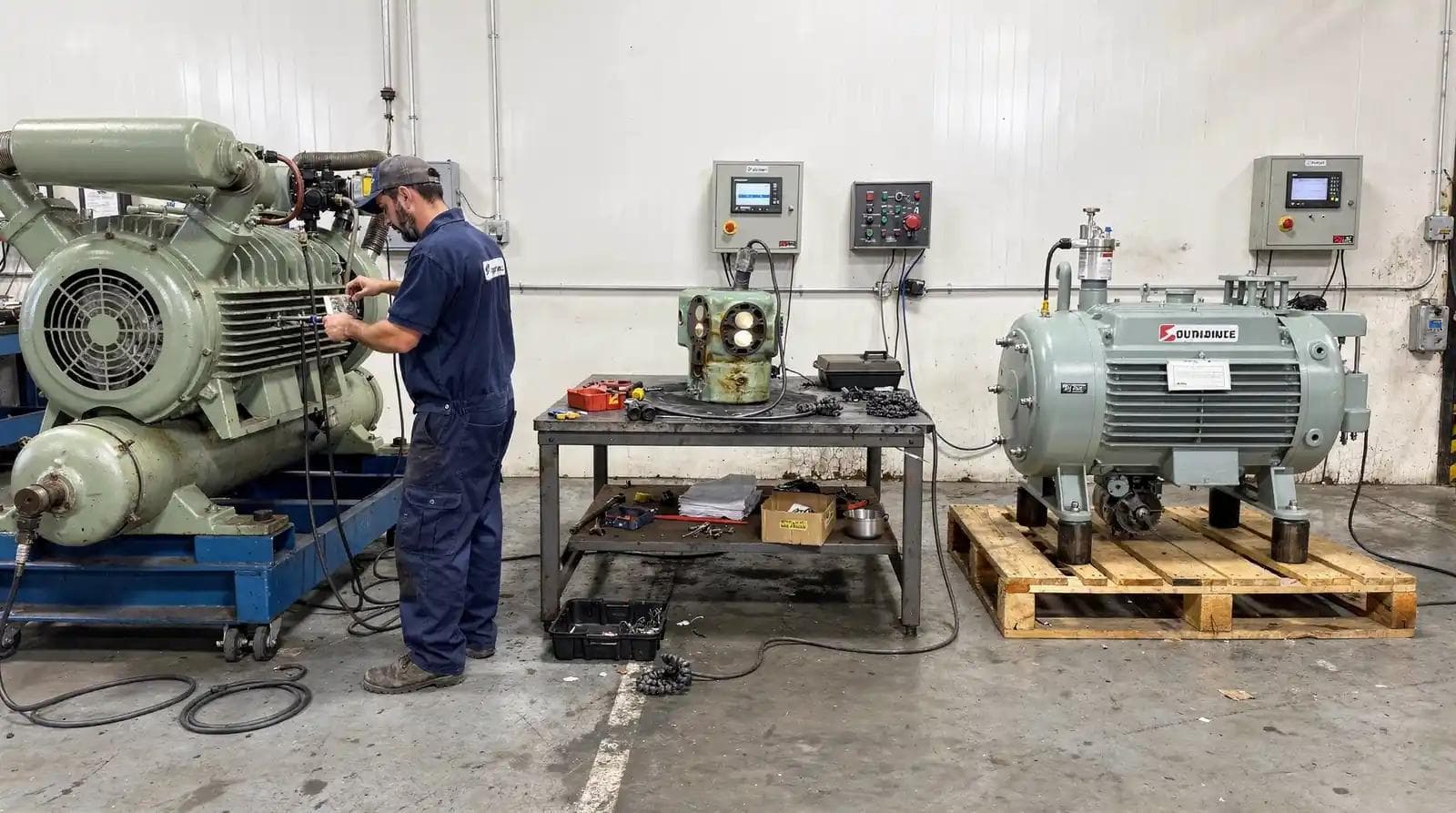
Compressors Unlimited offers a wide selection of remanufactured commercial screw compressors. Contact us for specific capacity options, serving everything from mid-size cooling plants to large-scale industrial refrigeration installations. That breadth allows plant operations leaders to match replacement units precisely to existing system loads without over-purchasing capacity that sits idle.
At the high end of the pressure spectrum, high-pressure screw compressor designs reach up to 1,100 psi (76 bar), a range built for fuel gas boosting and demanding process refrigeration duties. These pressures accommodate steady gas flow requirements while managing fluctuating inlet conditions common in turbine-fed systems.
How Do Compressor Types Affect Pressure and Capacity Choices?
Reciprocating, rotary, and centrifugal units remain the three most common compressor types in refrigeration service, and each handles pressure and capacity differently. A rotary screw compressor typically delivers stable output across a wide capacity band, making it a common choice for continuous-duty industrial loads.
Compressor Type
Typical Application
Reciprocating
Smaller, cyclical loads
Rotary
Continuous mid-to-large capacity
Centrifugal
Very large-capacity systems
Every compressor, regardless of type, functions as the prime mover that circulates refrigerant and builds the pressure a system needs to operate. An industrial refrigeration screw unit selected outside its rated pressure and capacity band strains components and shortens service life significantly.
How to Source, Maintain, or Replace a Screw Compressor?
Sourcing a screw compressor for industrial refrigeration comes down to two paths: buy remanufactured with an exchange of a core, or purchase OEM. Facility managers who choose poorly risk downtime that halts cold storage, food processing, or chemical cooling lines for days. Each path carries different cost, lead-time, and reliability tradeoffs worth weighing before a unit fails.
Providers of replacement rotary-screw units also supply precision rebuilds. OEM-spec parts, giving plant operators flexibility depending on budget and urgency. A full replacement suits aging systems with recurring failures. A rebuild extends the life of an otherwise sound compressor at lower cost.
What does the Core Exchange Program cover?
The Core Exchange Program accepts York DXS, Carrier 06T, Hitachi, and Trane CHHB, CHHN, CHHP, CHHT and Bitzer cores. After Compressors Unlimited sends a fully remanufactured rotary screw compressor to the customer, the customer has 21 days to return the failed compressor core. After receiving the exchange core, Compressors Unlimited remanufactures the rotary screw compressor so it is available for the next customer who needs the same model. This process cuts both cost and wait time compared to sourcing new equipment. This exchange model keeps critical spares moving without idle production time.
How fast can a replacement compressor arrive?
Shipping reaches customers nationwide and internationally, with Hot Shot Delivery available for stateside orders facing urgent downtime. Speed matters most when an industrial refrigeration screw compressor fails during peak production or in a temperature-sensitive facility.
Every remanufactured unit ships with a 12-month limited warranty, protecting plant budgets against early failure. Comparison points for decision-makers include:
- Warranty coverage: 12 months on remanufactured units
- Core acceptance: York, Carrier, Hitachi, and Trane
- Delivery options: standard nationwide/international, plus Hot Shot for urgent stateside needs
Screw compressors represent a critical investment in industrial HVAC and refrigeration systems, demanding reliable equipment and expert guidance. Compressors Unlimited brings decades of specialized experience to this complex market, offering remanufactured and new units from leading manufacturers alongside comprehensive warranty protection. Whether your operation requires immediate deployment or strategic planning, the combination of technical expertise, diverse product inventory, and flexible shipping solutions positions your facility for sustained performance and operational efficiency.
FAQ
What makes screw compressors different from reciprocating units?
Screw compressors use two intermeshing helical rotors with continuous rotary motion, while reciprocating compressors rely on a piston moving back-and-forth. This design eliminates the stop-start cycle that causes wear at valve and piston contact points.
Does Compressors Unlimited ship remanufactured screw compressors internationally?
Yes, Compressors Unlimited ships nationwide and internationally, and offers Hot Shot Delivery for stateside orders.
Final Thoughts on Screw Compressor Reliability
Screw compressors have become the standard choice for facility managers running continuous-duty HVAC and refrigeration systems, thanks to their intermeshing helical rotors, wide horsepower range, and steady output under sustained load. Understanding how these units compress gas, and how they compare to reciprocating and centrifugal designs, helps plant operations leaders match capacity and pressure ratings to actual system demands rather than guessing at replacement equipment.
Whether a facility needs a remanufactured unit, a core exchange, or fast delivery to limit downtime, Compressors Unlimited applies decades of rebuilding experience, a 12-month limited warranty, and nationwide and international shipping to keep industrial refrigeration and HVAC systems running reliably.