
How HVAC/R Commercial Compressors Work - An Overview
by Admin1 min read
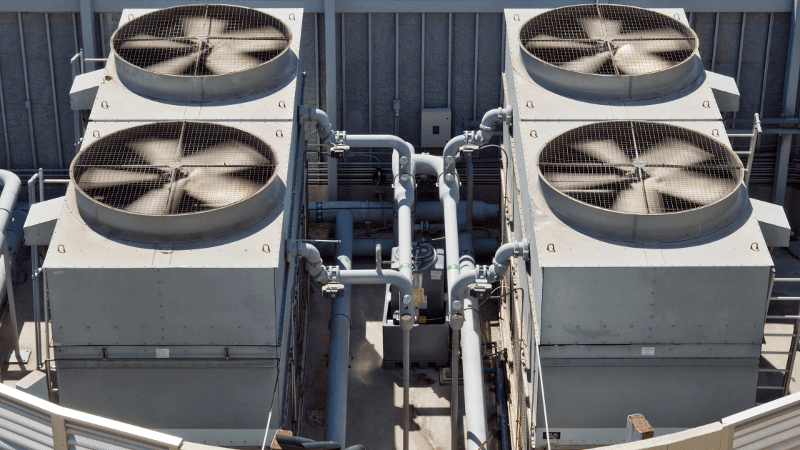
A commercial HVAC/R compressor is tasked with the important job of converting low-pressure refrigerant to high-pressure refrigerant within a HVAC/R system. Read more about how compressors work!
The Role of Refrigerant in Heat Transfer
How the HVAC/R Compressor Functions
Types of Compressors and Their Operation
- Reciprocating Compressors: These compressors operate similarly to a car engine. Inside, a piston compresses the refrigerant gas by drawing it into a chamber and then forcing it out at high pressure. These compressors are highly reliable but can be less efficient compared to other types due to the mechanical complexity of the piston system.
- Scroll Compressors: More commonly used in modern HVAC/R systems, scroll compressors offer better efficiency and quieter operation. They consist of two spiral-shaped components, one stationary and one orbiting. As the orbiting spiral moves, it compresses the refrigerant into smaller spaces, gradually increasing its pressure. Scroll compressors are highly efficient and are well-suited for commercial applications where consistent performance is key.
- Screw Compressors: Screw compressors are another high-efficiency option, particularly for large-scale commercial and industrial HVAC/R systems. These compressors use two interlocking screws to compress the refrigerant as it moves through the system. This continuous compression process leads to highly efficient operation, especially in applications where the HVAC/R system needs to run constantly. Screw compressors tend to be more expensive upfront but provide cost savings in the long run due to their efficiency.