
Comprehensive Guide to Semi-Hermetic Compressors for Industrial Applications
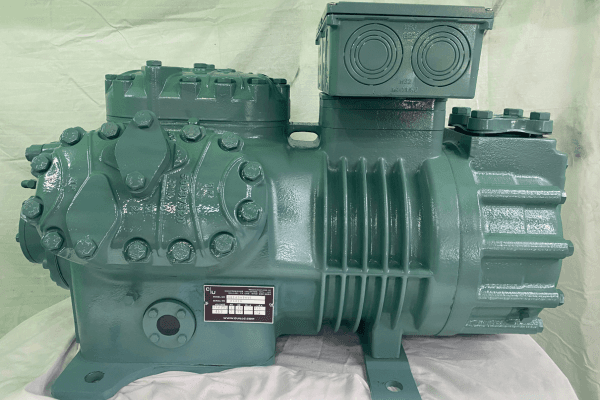
Optimize your refrigeration system with semi-hermetic compressors. Learn how to choose the right, serviceable unit for medium commercial AC applications today.
Semi-hermetic compressors are critical components in industrial refrigeration, delivering efficient cooling across a wide range of applications. This guide explains their design, function, operational benefits, and maintenance requirements to support reliable, cost-effective performance. As organizations pursue energy-efficient and lifecycle-optimized solutions, a clear understanding of semi-hermetic specifications and performance characteristics enables informed equipment selection. The article addresses functions, benefits, applications, selection criteria, maintenance practices, and key components associated with semi-hermetic commercial compressors.
Functions of a Semi-Hermatic Compressor
Semi-hermetic compressors serve as principal mechanical elements in refrigeration and HVAC systems. Their primary functions include:
- Protection from Contaminants: Designed with sealed casings, these compressors guard against external contaminants, ensuring optimal internal operating conditions.
- Enhanced Operational Efficiency: The closed design allows for better heat management, resulting in improved energy efficiency and lower operational costs.
- Maintenance Accessibility: These units typically feature serviceable designs that facilitate easier maintenance, reducing downtime and operational interruptions.
Advantages of Semi-Hermetic Designs in Medium Temperature Refrigeration Units
In medium-temperature refrigeration units, semi-hermetic designs provide improved serviceability, cost efficiency, and application flexibility. Their durable construction supports extended operational life and a stronger return on investment.
Benefits
Adoption of semi-hermetic compressors in industrial environments yields multiple operational advantages, such as:
- Serviceability Reduces Downtime: The design allows for easier access to components, enabling quick repairs and maintenance.
- Cost-Effectiveness of Remanufactured Units: The remanufacturing process enhances durability and brings down costs, making these compressors a budget-friendly option for businesses.
- Longevity and Maintenance Benefits: With minimal maintenance, semi-hermetic compressors can achieve a long service life, resulting in better overall reliability.
- Versatility in Various Applications: These compressors can be used in diverse environments, ranging from commercial refrigeration to industrial cooling processes.
Compressors Unlimited provides a range of options to address varying operational requirements and application profiles for commercial systems. We do not provide compressors for residential systems.
Applications in Commercial Refrigeration
Semi-hermetic compressors are commonly applied in commercial refrigeration for:
- Supermarkets: These compressors ensure consistent, efficient cooling for perishable goods.
- HVAC System Applications: They play a significant role in maintaining temperature control within large buildings and complexes.
- Cold Storage Facilities: The ability to maintain stable temperatures is crucial for preserving products in cold storage environments.
Remanufactured compressors from Compressors Unlimited also provide durable, application-specific solutions tailored to operational requirements.
Key Considerations for Selection and Installation
When selecting a semi-hermetic compressor, address the following factors:
- Cooling Capacity Requirements: Ensuring that the compressor's capacity aligns with the specific demands of the application is crucial for optimal performance.
- Energy Efficiency Factors: Higher efficiency units can significantly lower operational costs over time, making them preferable choices for energy-conscious customers.
- Maintenance Access Considerations: Select compressors with designs that facilitate ease of access for routine maintenance and repairs.
- Size and Configuration Needs: Consideration of the installation space and required configurations will impact the compressor's suitability for a given application.
Maintenance Tips
Proper maintenance is essential to sustain the performance and service life of semi-hermetic compressors. Key maintenance practices include:
- Routine Inspections: Regularly check for leaks, wear, and overall integrity to catch potential issues early.
- Refrigerant Level Monitoring: Maintaining appropriate refrigerant levels is critical to ensure efficient operation and prevent compressor strain.
- Establishing Maintenance Agreements: Regularly scheduled maintenance by qualified professionals can help extend the lifespan of the compressor.
Step-by-Step Maintenance Procedures to Maximize Compressor Efficiency
Follow these procedures to maintain efficient operation:
- Perform initial inspections upon installation.
- Set up a schedule for regular check-ups, including component inspections.
- Update or replace worn-out parts as needed.
These proactive measures contribute to improved performance and reduced downtime.
Common Troubleshooting Techniques for Semi-Hermetic Compressor Malfunctions
Prompt diagnosis and rectification of faults are essential. Common troubleshooting techniques include:
- Identifying unusual noises that could indicate mechanical issues.
- Checking for refrigerant leaks, which can reduce cooling efficiency.
- Verifying electrical connections to ensure consistent operation.
Timely correction of such faults prevents progressive damage and preserves compressor reliability.
What Are Semi-Hermetic Compressors and How Do They Support Industrial HVAC Systems?
A semi-hermetic compressor comprises a compressor assembly enclosed within a sealed casing, providing enhanced protection and operational efficiency for industrial HVAC applications.
Definition:
A semi-hermetic compressor is a refrigeration device used in industrial applications, characterized by a sealed casing that encloses the internal mechanical components.
Key Components:
Key components of semi-hermetic compressors include:
- Compressor Unit and Motor: Form the heart of the system for compressing refrigerant.
- Sealed Casing Advantages: Protects against external factors that could adversely affect performance.
- Control Systems: Regulates the operation to enhance efficiency and safety.
Design Features:
Notable design features include:
- Serviceable Shell: Facilitates easier maintenance and repair procedures.
- Robust Construction: Ensures longevity and operational reliability under demanding conditions.
- Configuration Variety: Offers flexibility in installation and operational setups.
Operational Advantages:
Operational advantages include:
- Ease of Maintenance: Designed for easier access to key components.
- Longevity with Proper Care: Suitable maintenance practices can extend the operational life.
- Overall Efficiency: Enhanced design leads to superior energy efficiency compared to standard units.
Specific Applications in HVAC Systems:
These compressors are applied in multiple HVAC contexts, including:
- Refrigeration Systems: Essential for maintaining optimal temperatures in commercial refrigeration.
- Role in Commercial HVAC: Providing reliable cooling solutions for large commercial environments.
- Applications in Industrial Processes: Supporting diverse industrial refrigeration needs.
How Does the Remanufacturing Process Enhance Compressor Reliability and Downtime Reduction?
Remanufacturing entails comprehensive refurbishment to restore compressors to original or equivalent specifications, with the objective of improving reliability and reducing unplanned downtime.
Quality Assurance and Testing Protocols in Remanufactured Refrigeration Compressors
Remanufactured compressors are subjected to rigorous quality-assurance protocols. Critical procedures include:
- Inspection and Testing Methods: Detailed evaluations assess each compressor's functionality.
- Certifications and Standards: Compliance with recognized industry standards ensures reliability.
- Importance of Quality Assurance: Guarantees that the end product meets the strict quality requirements organizations demand.
Impact of Remanufacturing on Industrial HVAC/R Compressor Repair and Lifecycle Extension
Remanufacturing improves compressor reliability and service life by:
- Cost Savings from Remanufactured Products: Lower costs while maintaining high-quality performance levels.
- Environmental Benefits: Reducing waste and promoting sustainable practices within the industry.
- Enhanced Performance Reliability: Refurbished units perform comparably to new models with proper standards.
Which Spare Parts and Accessories Are Essential for Maintaining Semi-Hermetic Compressors?
Maintaining an adequate inventory of spare parts is essential to preserve continuous operation. Key components to consider include:
- Commonly Needed Spare Parts: Elements like motors, valves, and electrical components regularly require replacement.
- Maintenance Requirements: Frequent checks and timely replacements help maintain compressor efficiency.
- Compatibility Considerations: Verify that spare parts are suitable for the specific compressor model being serviced.
Overview of Critical Semi-Hermetic Compressor Parts and Compatibility Considerations
Understanding critical components and compatibility requirements is essential for effective maintenance of semi-hermetic compressors.
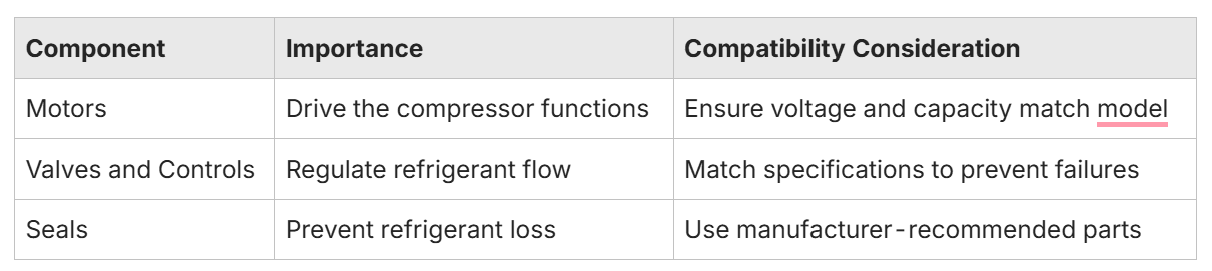
Monitoring and maintaining these components is critical to operational efficiency.
Inventory Management Strategies for Commercial Refrigeration Compressor Components
Effective inventory-management strategies include:
- Tracking Methods: Use inventory software to monitor parts availability.
- Best Practices: Implement regular audits to prevent shortages or overstocking.
- Reorder Strategies: Set minimum stock levels for critical components to maintain operational continuity.
How Do Energy Efficiency and Compliance Regulations Influence Industrial Semi-Hermetic Compressor Usage?
Energy efficiency regulations materially influence the compressor market by establishing performance requirements and compliance thresholds for new systems.
Understanding Energy Rating Standards and Their Application to Commercial Refrigeration Compressors
Understanding energy rating standards is essential when selecting compressors:
- Key Energy Rating Metrics: Understand classifications such as EER (Energy Efficiency Ratio).
- Comparative Analysis: Analyzing how different compressors meet these standards can guide purchasing decisions.
- Benefits of High-Rating Units: Enhanced efficiency often correlates with lower operational costs.
Incorporating Sustainable Practices into HVAC Compressor Selection and Operation
Sustainability considerations for compressor selection include:
- Sustainable Materials: Prioritizing compressors made from recyclable or sustainable materials.
- Energy-Saving Technologies: Opting for state-of-the-art technological advancements that maximize energy savings.
- Best Operational Practices: Integrating best practices ensures that compressors operate at peak performance with minimal environmental impact.
What Post-Sale Support and Warranty Services Ensure Long-Term Customer Satisfaction?
Robust post-sale support and warranty programs are critical to sustain long-term customer satisfaction and operational continuity.
Scope and Terms of Warranty Coverage for Remanufactured and New Compressors
Review warranty terms, duration, and coverage specifics to make informed purchasing decisions and manage long-term asset performance.
Customer Service and Rapid Response Strategies for Compressor Downtime Mitigation
Rapid-response strategies to mitigate downtime include:
- Service Level Agreements: Defining expectations for customer service responses.
- Rapid Deployment for Repairs: Ensuring technicians are readily available for urgent repairs.
- Customer Communication Strategies: Keeping clients informed during downtime for better relationship management.
Reliable support and timely service are essential to maintain customer satisfaction in industrial heating and cooling operations.
Frequently Asked Questions
1. What differentiates semi-hermetic compressors from standard compressors?
Semi-hermetic compressors feature a sealed casing that protects internal components from contaminants, improving efficiency and reliability. Unlike open designs, the semi-hermetic construction reduces exposure to external damage and refrigerant loss, improves heat management, and can lower maintenance requirements, making them suitable for a broad range of industrial applications.
2. How does the remanufacturing process impact compressor performance?
Remanufacturing restores semi-hermetic compressors through inspection, repair, and testing to meet or exceed original-equipment specifications. When executed according to established protocols, remanufacturing enhances reliability, reduces acquisition cost, and extends service life, providing a sustainable alternative to new units.
3. What common issues can arise with semi-hermetic compressors?
Common faults include refrigerant leakage, abnormal mechanical noises, and electrical connection failures. Regular inspection and monitoring of refrigerant charge and system integrity facilitates early detection and mitigates performance degradation and unplanned downtime.
4. What maintenance strategies can extend the lifespan of a semi-hermetic compressor?
To extend service life, implement scheduled inspections for leaks and component wear, monitor refrigerant charge, and maintain a preventative maintenance agreement with qualified technicians. Timely replacement of worn parts prevents severe failures and supports long-term reliability.
5. How do energy efficiency standards affect compressor selection?
Energy-efficiency standards inform compressor selection by defining metrics such as EER. Selecting higher-rated units reduces operating costs and environmental impact. Procurement should favor models with energy-saving features that comply with applicable regulations.
6. Are there specific spare parts necessary for semi-hermetic compressors?
Essential spare parts include motors, valves, and seals. Ensure replacement components match the specific compressor model to avoid compatibility issues. Maintaining an inventory of these parts reduces repair lead times and limits downtime.
7. What is the role of service level agreements in customer satisfaction?
Service-level agreements establish support expectations and response times for compressor faults. Well-defined SLAs enable rapid technician deployment, minimize downtime, and support transparent communication with clients during maintenance and repairs.
Semi-Hermetic Compressors are Vital to Industrial Applications
Utilizing semi-hermetic compressors can significantly enhance efficiency, reliability, and serviceability in various industrial applications. Their ability to reduce downtime and operational costs makes them a valuable investment for businesses seeking sustainable refrigeration solutions. To ensure optimal performance, regular maintenance and the use of quality remanufactured units are highly recommended. Explore our comprehensive inventory of semi-hermetic compressors and related components to find the ideal solution for your operational needs.