
Quality Control in Compressor Remanufacturing: Testing Protocols That Ensure OEM-Level Performance
Proper remanufacturing with comprehensive testing protocols offers a sustainable, cost-effective alternative to purchasing new equipment.
When a commercial HVAC or refrigeration system goes down, facility managers face a critical decision. They need their equipment back online fast, but they also need reliability that won't leave them scrambling for repairs again in six months. This is where proper quality control in commercial HVAC/R compressor remanufacturing and installation makes all the difference.
After nearly four decades of remanufacturing commercial hvac/r compressors, we’ve learned that the gap between a truly remanufactured unit and a hastily rebuilt one comes down to experience and testing protocols. Let us walk you through what separates professional remanufacturing from quick patch jobs.
What Makes Remanufacturing Different From Rebuilding
Before we get into testing, it's worth clarifying what remanufacturing actually means. A rebuilt compressor typically gets cleaned up, has a few worn parts swapped out, and gets bolted back together. Remanufacturing is a completely different process.
True remanufacturing means complete disassembly to bare casting, thorough inspection of every component, replacement of all wear parts with new OEM-spec components, and comprehensive testing under simulated operating conditions. The result should perform identically to a new unit.
The testing phase is where this promise either holds up or falls apart.
Pre-Assembly Component Testing
Quality control starts long before final assembly. Each critical component undergoes individual testing to verify that it meets specifications.
Crankshaft Inspection of a Commercial HVAC/R Compressor
The crankshaft receives dimensional inspection using precision measurement tools. We're looking at bearing journal diameters, runout, and surface finish. If any measurement falls outside OEM tolerances, the crankshaft gets replaced rather than attempting to machine it back into spec.
Cylinder Bore Verification of a Commercial HVAC/R Compressor
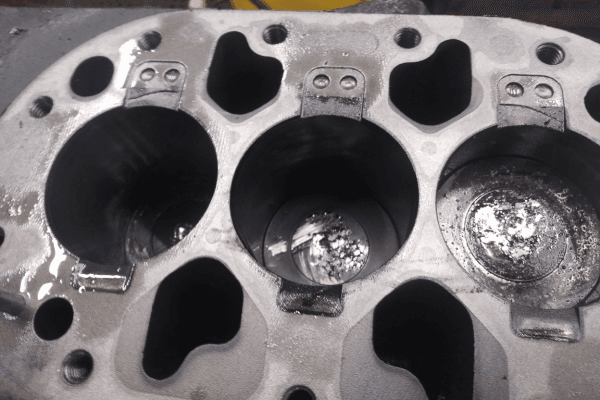
After honing cylinder bores, we verify dimensions with inside micrometers. The goal is to achieve proper clearance for new piston rings. Too tight and you'll have friction and heat buildup. Too loose and you'll lose compression efficiency.
Valve Plate Testing for a Commercial HVAC/R Compressor
New valve plates get inspected for flatness using a surface plate and feeler gauges. Valve reeds receive spring tension testing to ensure they'll open and close properly under operating pressures. This seems tedious, but valve issues account for a significant percentage of premature failures.
Motor Electrical Testing for a Commercial HVAC/R Compressor
If the compressor includes an integral motor, the stator undergoes megohm testing to verify the integrity of the winding insulation. We're looking for any indication of a breakdown that could lead to motor failure. Rotors are surge-tested to identify any turn-to-turn shorts.
Assembly Process Controls for a Remanufactured Commercial HVAC/R Compressor
During reassembly, specific checkpoints ensure quality at every stage.
Torque Specifications for a Remanufactured Commercial HVAC/R Compressor
Every fastener gets torqued to the manufacturer's specifications using calibrated torque wrenches. This matters more than most people realize. Under-torqued head bolts can lead to gasket leaks. Over-torqued bolts risk stripping threads or cracking castings.
Bearing Installation on a Remanufactured Commercial HVAC/R Compressor
Bearings are properly installed using bearing drivers and presses. We verify preload measurements and endplay according to OEM specifications. Sloppy bearing installation is a fast track to premature failure.
Oil Pump Verification for a Commercial HVAC/R Compressor
The oil pump undergoes bench testing before installation. We verify flow rates and pressure delivery match specifications. In a commercial compressor, inadequate oil delivery means bearing failure and catastrophic damage.
Leak Testing Protocols for our HVAC/R Compressors
After assembly, the compressor must prove it can hold pressure without leaks.
Nitrogen Pressure Testing for a Commercial HVAC/R Compressor
The assembled compressor gets charged with dry nitrogen to test pressure. We typically pressurize to 150 psi and let it sit. The unit must hold pressure for at least 24 hours without any measurable drop.
Submersion Testing for a Commercial HVAC/R Compressor
We perform total-immersion testing in a clear-liquid tank on every compressor before it is released into inventory. This reveals even the smallest leaks that might not show up on a pressure gauge. Any bubbles mean the unit goes back for repair.
Vacuum Testing for HVAC/R Compressors
Some remanufacturers also perform vacuum hold testing. The compressor gets evacuated to a deep vacuum and monitored. This can reveal leaks that might not show during positive pressure testing.
Performance Testing Under Load
This is where the quality of the entire remanufacturing process gets validated.
Run Testing Requirements
Every remanufactured hvac/r compressor runs under simulated load conditions before it ships. We connect it to a test rig that mimics actual operating conditions with proper refrigerant, oil, and temperature differentials.
Oil Pressure Monitoring for a Remanufactured Commercial HVAC/R Compressor
During run testing, oil pressure is monitored continuously. We're verifying that the oil pump delivers adequate pressure across the full operating range. Low oil pressure during testing means something is wrong, and we need to identify and fix it before the unit leaves the facility.
Amperage Verification for a Remanufactured Commercial HVAC/R Compressor
Current draw gets measured and compared to nameplate specifications. Higher than expected amperage can indicate mechanical binding, valve issues, or motor problems. Lower amperage might suggest worn components not providing rated capacity.
Capacity Testing for an HVAC/R Compressor
The compressor should deliver its rated capacity. We measure this by monitoring suction and discharge pressures along with superheat and subcooling values. If capacity falls short, we need to find out why.
Temperature Monitoring During Remanufacturing of a Commercial HVAC/R Compressor
We monitor bearing temperatures, discharge temperature, and motor winding temperature. Excessive temperatures in any area point to potential problems that need resolution.
Sound and Vibration Analysis
Unusual noises or excessive vibration during run testing indicate problems. Experienced technicians can often identify specific issues by sound alone, but we also use vibration analysis tools for borderline cases.
Documentation and Traceability for Quality HVAC/R Compressors
Professional remanufacturing includes comprehensive documentation.
Work Order Tracking
Each compressor has a work order that follows it through every station. Technicians initial each completed step, creating accountability and traceability.
Test Results Recording
All test measurements get recorded. This documentation becomes part of the compressor's history and can be valuable for troubleshooting if any issues arise after installation.
Component Replacement Records of a Compressor
We document which components were replaced, including part numbers and supplier information. This traceability matters if there's ever a question about parts quality.
Why These Protocols Matter for Remanufactured Commercial Compressors
You might wonder if all this testing is really necessary. After all, the compressor worked before it failed, right?
The reality is that a compressor failure rarely happens in isolation. Whatever caused the original failure likely damaged other components. Maybe bearing debris contaminated the oil system. Perhaps high temperatures degraded seals. Overheating could have affected motor windings.
Without comprehensive testing and proper installation, these secondary issues stay hidden until the compressor fails again after installation. That's expensive, frustrating, and damages trust.
Finding a Reliable HVAC/R Compressor Remanufacturer for Your Facility
Quality control in compressor remanufacturing isn't just a checklist of procedures. It's a commitment to delivering equipment that performs as well as new equipment, backed by testing data to prove it.
The testing protocols outlined here represent industry best practices developed over decades. They ensure that when a remanufactured compressor gets installed, it will deliver reliable performance for years to come.
For facility managers, HVAC/R contractors, and technicians, understanding these quality control measures helps in selecting remanufacturing partners who will deliver genuine value. The cheapest option rarely proves to be the best investment over time.
Proper remanufacturing with comprehensive testing protocols offers a sustainable, cost-effective alternative to purchasing new equipment. It's good for budgets, good for reducing downtime, and good for the environment.
When you need a compressor replacement, choose a remanufacturer who takes quality control seriously. Your facility's reliability depends on it.