
Compressor Inventory Strategies: How Building Better Spare Compressor Management Saves Time and Money
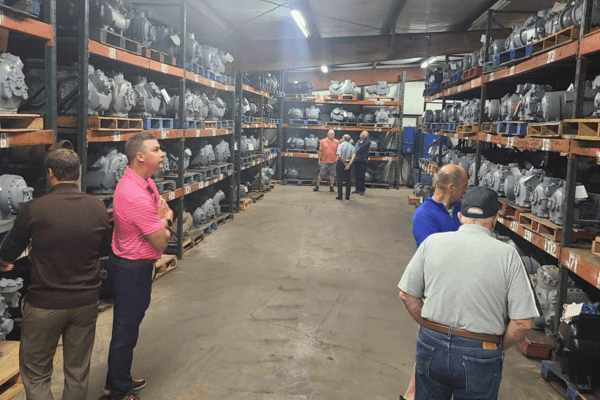
By adopting a structured compressor inventory strategy, facilities gain control over one of the most critical risks in commercial HVAC and refrigeration operations.
Compressor Inventory Strategies: How Building Better Spare Compressor Management Saves Time and Money
For facility managers, refrigeration supervisors, and commercial HVAC contractors, compressor failure is never just a mechanical problem. It is an operational issue that affects uptime, budgets, safety, and customer confidence. One failed compressor can shut down a supermarket rack, compromise a cold storage warehouse, or disable a critical comfort system in a hospital or data center.
Yet many organizations still rely on reactive replacement strategies. They wait until a compressor fails before sourcing a replacement. In today’s market, with extended lead times and rising equipment costs, that approach is increasingly risky.
Smart organizations are shifting toward proactive compressor inventory strategies that reduce downtime, control costs, and improve long-term system reliability. This blog post explains how better spare parts management, especially when paired with remanufactured compressors, creates measurable operational and financial benefits.
Why Compressor Inventory Planning Matters More Than Ever
Commercial HVAC and refrigeration systems are under more pressure than they were a decade ago. Systems run longer hours, carry heavier loads, and operate in environments affected by tighter refrigerant regulations and supply chain constraints.
When a compressor fails today, replacement is rarely immediate. New OEM compressors may have lead times measured in weeks or months. During that wait, facilities face lost revenue, emergency labor costs, temporary cooling solutions, or even product loss.
A well-planned compressor inventory strategy eliminates most of that risk. By having the right spare compressors identified, staged, or readily available, organizations can respond to failures with confidence instead of urgency.
The True Cost of Not Having a Spare Compressor
Many organizations hesitate to invest in spare compressors because of upfront cost concerns. What often gets overlooked is the far greater cost of not having one when it is needed.
Consider the indirect expenses associated with a compressor failure:
- Emergency service calls and overtime labor
- Refrigerant recovery and recharge costs
- Lost inventory in refrigeration environments
- Tenant complaints or regulatory exposure
- Disrupted operations and missed deadlines
In supermarkets and cold storage facilities, a single compressor failure can result in tens of thousands of dollars in losses within hours. In healthcare or data center environments, downtime can carry even greater consequences.
A planned spare compressor turns a crisis into a controlled maintenance event.
Identifying Which Compressors Should Be Stocked
Not every compressor in a facility needs a dedicated spare. Effective inventory strategies focus on critical and risk, not quantity.
Start by identifying compressors that meet one or more of the following criteria:
- Serve mission-critical systems such as refrigeration racks, operating rooms, or server cooling
- Have a history of failures or high run hours
- Are older models or discontinued by the OEM
- Have long lead times when ordering new
- They are difficult to retrofit or replace quickly
Once these compressors are identified, document the full model number, electrical configuration, refrigerant, oil type, and application. This information is essential for sourcing a compatible spare.
Why Remanufactured Compressors Make Inventory Planning Practical
For many facilities, stocking brand-new compressors is cost-prohibitive. This is where remanufactured compressors become a strategic advantage.
A remanufactured compressor is rebuilt to OEM performance standards through full disassembly, machining, replacement of wear components, and pressure testing. When sourced from a reputable remanufacturer, such as Compressors Unlimited, performance and reliability are comparable to new equipment.
Key advantages for inventory planning include:
- Lower capital cost compared to new OEM compressors
- Faster availability for common commercial models
- Configuration to match existing refrigerants and oils
- Support for legacy and discontinued equipment
- Reduced financial risk when holding spares
At Compressors Unlimited, remanufactured compressors are built for commercial HVAC and refrigeration applications and shipped with a limited warranty. This allows facilities to stock or stage spares with confidence.
On-Site vs Off-Site Inventory Strategies
Not every organization needs to store compressors on site. Effective inventory management can take different forms depending on space, budget, and risk tolerance.
On-Site Spares
Best suited for facilities with critical uptime requirements such as hospitals, cold storage warehouses, and large supermarkets.
Benefits include immediate availability and the fastest possible recovery time. Consider climate-controlled storage and proper handling to protect seals and internal components.
Vendor-Staged Inventory
In this approach, compressors are identified and reserved with a trusted supplier but not physically stored at the facility. When failure occurs, the unit ships immediately.
This reduces storage concerns while still shortening response time. Many organizations find this to be a good balance.
Core Exchange Planning
Facilities with multiple identical compressors can plan ahead by rotating failed cores into remanufacturing while keeping a ready spare in service. This approach spreads cost over time and keeps inventory fresh.
Aligning Inventory With Refrigerant Regulations
Refrigerant phaseouts add another layer of complexity to compressor inventory planning. Compressors configured for phased-down refrigerants may become harder to service over time.
A smart inventory strategy considers future refrigerant availability. Remanufactured compressors can often be configured for low-GWP alternatives such as R-448A, R-449A, or R-513A while still fitting existing systems.
This allows facilities to remain compliant without committing to full system replacement.
Standardization Reduces Inventory Complexity
One of the most effective ways to reduce inventory burden is compressor standardization. Facilities with multiple locations often operate a wide mix of equipment due to phased upgrades over time.
Where possible, standardizing on a limited number of compressor models, voltages, and refrigerants simplifies spare planning. It reduces the number of unique spares needed and increases the likelihood that a spare can be used across multiple systems.
Standardization also improves technician familiarity and reduces installation errors.
Documentation Is Just as Important as the Hardware
A spare compressor is only useful if the team knows it exists and how to deploy it.
Effective inventory strategies include clear documentation:
- Compressor model and serial numbers
- Electrical and refrigerant specifications
- Oil type and shipping condition
- Storage location or vendor staging details
- Installation notes and system compatibility
This information should be accessible to maintenance staff, contractors, and decision makers. When a failure occurs, time is lost searching for information just as often as searching for parts.
Real-World Example: Cold Storage Inventory Planning
A regional cold storage operator managed multiple freezer facilities with identical compressor racks. Historically, failures resulted in emergency sourcing and long delays.
The company worked with a remanufacturer to identify two critical compressor models and staged remanufactured spares for each facility. Failed compressors were rotated back into remanufacturing as cores.
The results included:
- Faster recovery from failures
- Predictable maintenance costs
- Reduced emergency labor
- Improved compliance with refrigerant transitions
What was once a reactive problem became a controlled process.
Industry Perspective on Supply Chain Risk
Industry publications continue to highlight the importance of planning ahead for HVAC and refrigeration equipment.
ACHR News has reported extensively on equipment shortages and extended lead times affecting contractors and facility owners.
These challenges are unlikely to disappear soon, which makes inventory planning a long-term necessity rather than a temporary workaround.
Common Questions About Compressor Inventory Planning
How many spare compressors should a facility keep?
That depends on system criticality, failure history, and lead times. Many facilities start with one spare for each critical compressor type.
Are remanufactured compressors reliable enough for spares?
Yes, when sourced from a reputable remanufacturer, such as Compressors Unlimited. They are tested under load and built to OEM performance standards.
Is vendor-staged inventory reliable?
Yes, if you work with a supplier that maintains inventory and understands your systems. Clear agreements and documentation are key.
Can inventory planning reduce long-term maintenance costs?
Absolutely. It reduces emergency expenses, overtime labor, and downtime-related losses.
A Smarter Way Forward
Compressor failures are inevitable. Chaos and downtime are not.
By adopting a structured compressor inventory strategy, facilities gain control over one of the most critical risks in commercial HVAC and refrigeration operations. Remanufactured compressors make that strategy financially practical, operationally flexible, and technically sound.
At Compressors Unlimited, we work with facility managers, contractors, and operators to identify critical compressors, configure remanufactured spares, and support long-term equipment planning. Every unit is fully tested and backed by a limited warranty.
If you want help building a compressor inventory strategy that protects your operation, contact our team and start planning before the next failure occurs.