
Understanding Compressor Nomenclature: What All Those Letters and Numbers Actually Mean
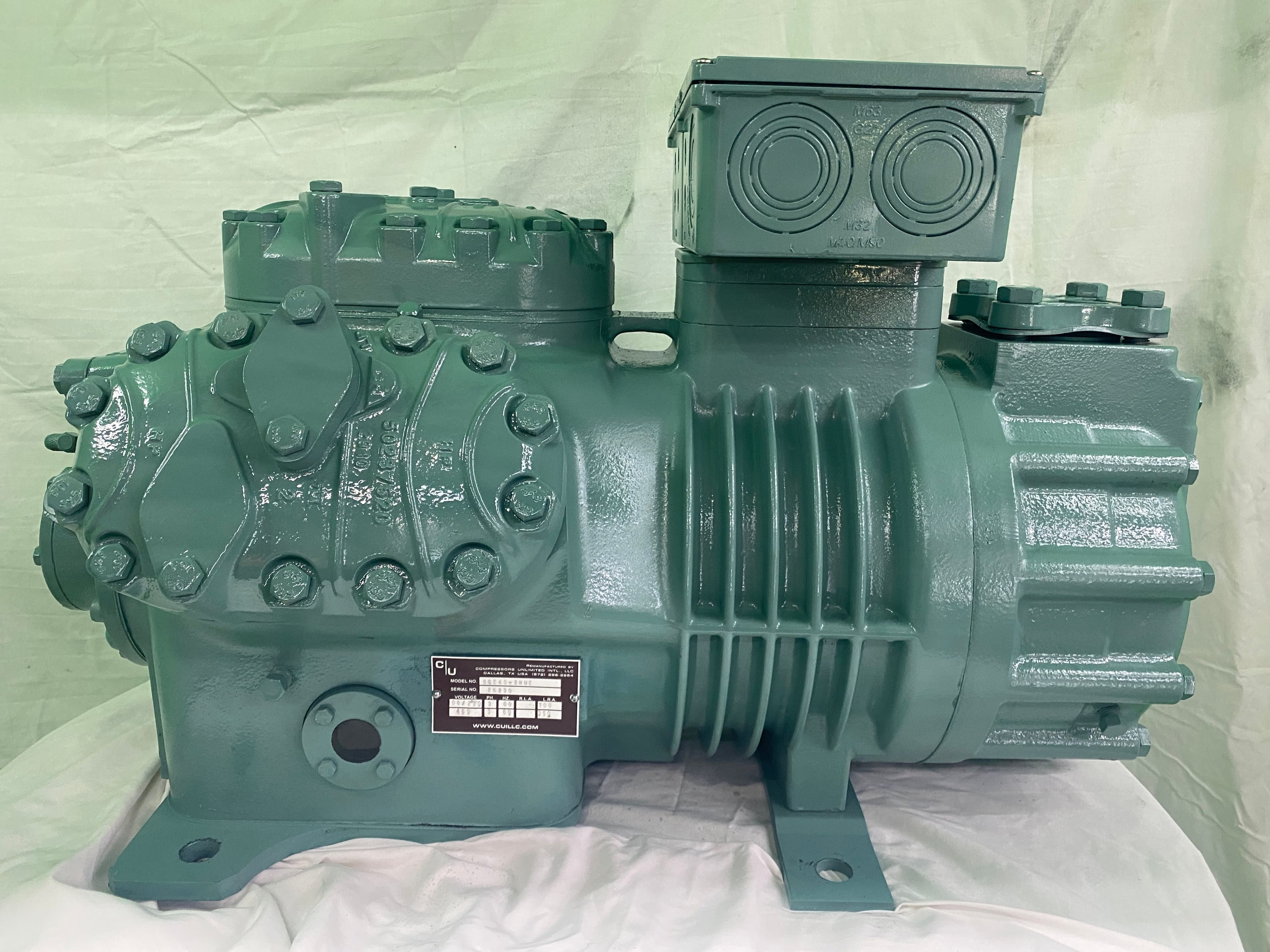
Understanding compressor nomenclature can help contractors identify the right commercial HVAC/R replacement. Learn how to read Carrier, Carlyle, and Copeland compressor model numbers, avoid common identification mistakes, and verify the correct replacement before ordering.
A commercial HVAC/R compressor model number can help you identify the correct replacement, but only when you use the right manufacturer’s guide. A code that identifies capacity in one product family may describe a different feature in another.
Compressor nomenclature is the manufacturer’s system for identifying a compressor’s family, configuration, and other specifications. It is not a universal code shared by Carrier, Carlyle, Copeland, and every other brand.
Recent model standardization also makes it important to distinguish an older compressor’s original identity from its current replacement number. Start with the complete nameplate, then verify the model against the appropriate documentation.
Why Compressor Nomenclature Matters
Depending on the manufacturer and product family, a model number can identify application, displacement or nominal capacity, electrical characteristics, design generation, and accessory configuration.
However, it does not document every change made to the refrigeration system. A previous refrigerant conversion or component replacement still needs to be confirmed through service records and inspection.
Use nomenclature to begin the identification process, not as proof that two compressors are interchangeable. Copeland’s Online Product Information tool provides specifications, cross-references, and engineering information for that next verification step.
What Changed in Carlyle Compressor Model Numbers?
Carlyle’s 06D, 06E, and 06CC Model Standardization bulletin, revised March 31, 2026, identifies changes effective June 1, 2026.
For standardized 06E configurations, its table lists:
Application
OEM prefix
Service prefix
Air conditioning
06EH
06ET
Medium-temperature refrigeration
06EM
06EY
Low-temperature refrigeration
06ER
06EZ
The update also changes unloading configurations and supplied components. The 06CC and 06CY base prefixes remain, although certain electrical, protection, and oil-charge options change.
These are not blanket instructions to substitute one prefix for another. Older guides associate some service prefixes differently. Verify the complete model, applicable document revision, and replacement configuration with the supplier before ordering.
An older nameplate still identifies the originally supplied compressor. Do not use a new standardization chart to reinterpret that unit retroactively. If in doubt, ask one of our techs; they will help you get the correct replacement.
Carrier Nomenclature Example: Reading a Legacy 06E Code
For an older code such as 06ET275610, do not group the middle digits as “275” and assume they represent BTUs or tonnage.
Carlyle’s legacy 06E chart separates the compressor type, design configuration, displacement, electrical characteristics, design variable, and final model or package designation. In that format, 75 is the displacement designation in cubic feet per minute at 1,750 rpm, not a 75-ton cooling rating. The preceding 2 belongs to a separate field.
The legacy 06ET prefix identifies an air-conditioning service compressor configuration, not a particular refrigerant. The trailing characters also have separate meanings rather than functioning as one combined “610” motor code.
Another distinction matters: 06E does not automatically mean six cylinders. Carlyle’s 06E product data includes four-cylinder and six-cylinder models. Its listed 06EA550 has four cylinders, while the 06EA575 has six.
Those examples illustrate why identifying the family is only the first step. Use the full code and the chart for that compressor’s generation.
Copeland Nomenclature Example: Do Not Read R12 as R-12
Copeland’s published performance data provides a useful example: 3DB3R12M0-TFC.
Although this model contains the characters R12, the referenced performance sheet specifies HCFC-22, not refrigerant R-12. The same sheet identifies TFC as 208/230 volts, three-phase, 60 Hz. It is an electrical designation, not a mounting description.
In the format described in Copeland’s Discus history, the character immediately before the electrical-code separator can identify the original oil configuration: 0 for mineral oil, E for polyolester oil, and L for less oil. These meanings are specific to the documented format and are not universal across all compressor families.
Also record the bill-of-material suffix when one appears on the nameplate. Copeland’s documentation shows that suffixes can distinguish supplied protection and service configurations. Do not drop them from a replacement inquiry.
This example explains the naming format. It is not a recommended substitute for another model.
Discus II and Discus III Use Different Generation Codes
Copeland’s Discus II and Discus III nomenclature reference identifies a fourth-character distinction for 4D and 6D compressors.
Its standard example changes from 4DH3R22ME-TSK-C00 to 4DHNR22ME-TSK-C00. The digital example changes the fourth character from D to X.
The reference was originally published in 2017 and updated in 2026. Its recent revision date should not be mistaken for evidence that the entire naming transition happened in 2026.
Common Mistakes When Reading Compressor Model Numbers
Using one chart for every generation. Check whether the reference covers the original compressor, a standardized successor, or a service replacement. Similar-looking codes can represent different configurations.
Discarding the serial number. The model identifies the configuration, but the serial number can help establish production history. Send both, along with a clear photo of the nameplate.
Treating displacement as cooling capacity. Displacement describes swept volume. Check cooling performance at the intended refrigerant, evaporating temperature, condensing temperature, and other rating conditions.
Guessing from an incomplete number. Missing characters and omitted suffixes can conceal important differences. Mark uncertain characters rather than guessing between a zero and the letter O.
Why Remanufacturing Keeps Nomenclature Relevant
Remanufacturing gives contractors another replacement option when an existing compressor requires attention. Accurate identification still matters because the supplied unit must match the application’s mechanical and electrical requirements.
At Compressors Unlimited, commercial compressor remanufacturing includes inspection, component evaluation, reassembly, and testing. Remanufacturing does not, by itself, establish approval for a different refrigerant or certify the entire system’s compliance.
Oil information also needs confirmation. Compressors Unlimited normally supplies mineral oil or POE oil based on the known application, and some compressors ship without oil after testing. The installing contractor determines the refrigerant and verifies the appropriate oil and charge.
A historical oil character is useful background, but it should not replace confirmation of the replacement compressor’s actual shipping condition.
How to Use Nomenclature When Ordering Replacements
Before requesting a replacement, assemble five pieces of information:
- Complete identification. Provide the full model, serial number, suffixes, and a readable nameplate photo.
- Electrical requirements. Confirm voltage, phase, frequency, starting arrangement, and required motor protection.
- Current application. Identify the refrigerant, operating conditions, equipment model, and any previous conversions.
- Required components. Confirm unloading arrangements, controls, terminals, connections, and accessories that must be supplied or transferred.
- Replacement confirmation. Ask the supplier to verify the full cross-reference and explain differences before installation.
The Compressors Unlimited Replacement Compressor Finder provides a starting point for matching an existing model. Include the application details rather than relying on a short model-family search alone.
Get the Correct Compressor Replacement
Compressor nomenclature is valuable because it narrows the search. The nameplate, manufacturer documentation, service history, and application requirements complete the picture.
When an older model has a different replacement number, verify what changed before assuming it is a direct interchange. That extra review matters most when electrical connections, unloading, or supplied accessories differ.
Compressors Unlimited helps contractors identify commercial HVAC/R replacement options, with remanufactured compressors backed by a limited warranty. Request a compressor quote with complete nameplate information and current system requirements so we can evaluate the replacement for the job.