
Understanding Commercial Compressor HVAC/R Motors & Drives
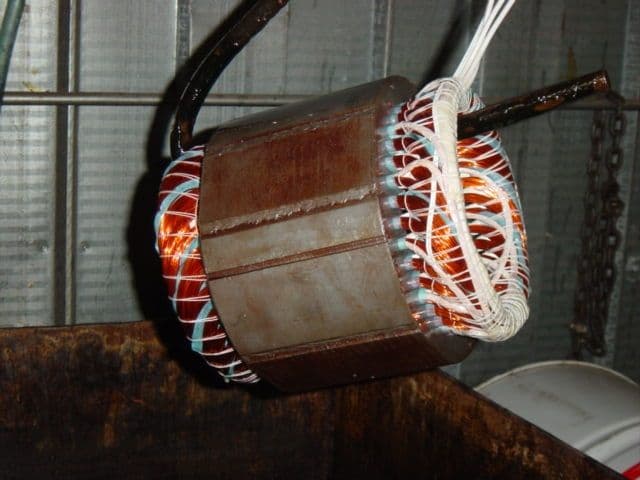
Commercial compressor motors and drives play a critical role in HVAC/R performance, reliability, and energy consumption. Learn how single-phase and three-phase motors work, when variable-speed drives are used, and what electrical engineers should consider when evaluating motor efficiency, protection, and compressor performance.
Commercial HVAC and refrigeration compressors depend on more than mechanical components to operate reliably. The compressor motor, electrical supply, starting method, protection system, and drive technology all affect compressor performance, energy consumption, and service life.
For HVAC/R technicians working with commercial HVAC/R equipment, understanding these relationships is important when specifying equipment, diagnosing failures, or planning a compressor replacement.
Commercial applications may use single-phase motors, three-phase motors, or variable-speed motor and drive systems. Each has different electrical characteristics and applications.
Compressors Unlimited supplies commercial HVAC/R compressors along with commercial compressor parts and accessories, including electrical components for Carrier and Copeland compressor applications.
What Types of Motors Are Used in Commercial HVAC/R Compressors?
The motor used in a commercial compressor depends largely on compressor capacity, electrical service, equipment design, and application.
According to ASHRAE, motor selection for positive-displacement compressors involves factors such as horsepower, voltage, number of phases, speed, starting torque, operating temperature, and compressor starting conditions.
The three configurations HVAC/R technicians are most likely to encounter are:
- Single-phase compressor motors
- Three-phase compressor motors
- Variable-speed motor and drive systems
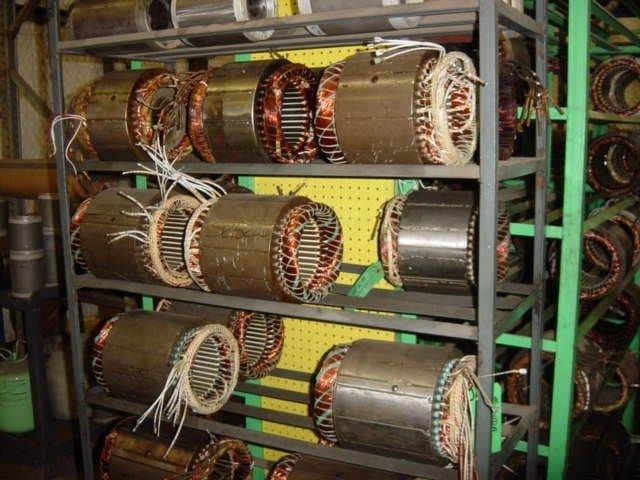
Larger commercial and industrial HVAC/R applications rely heavily on three-phase power, while single-phase motors are more common in smaller equipment.
Single-Phase Compressor Motors
Single-phase HVAC motor types are generally found in smaller commercial refrigeration and HVAC applications. Depending on the design, these motors may use start or run capacitors to help produce the torque required for compressor startup.
For HVAC/R technicians, three areas deserve particular attention.
Starting Current
Compressor startup can produce significant inrush current. Conductors, contactors, circuit protection, transformers, and generators must accommodate these starting conditions.
Starting Torque
A compressor may have a pressure differential across the refrigeration circuit when starting. The motor must provide enough torque to start the compressor under its designed conditions.
Capacitors and Starting Components
A failing capacitor or starting component can cause hard starting, overheating, excessive current, or failure to start.
Although single-phase motors remain important in smaller equipment, larger commercial compressors typically move into three-phase configurations.
Three-Phase Motors in Commercial HVAC/R
Three-phase motors dominate many larger commercial and industrial compressor applications.
ASHRAE notes that large commercial refrigeration motors are predominantly three-phase. This makes three-phase systems especially relevant in applications such as:
- Large commercial air conditioning
- Cold storage
- Supermarket refrigeration
- Industrial refrigeration
- Manufacturing facilities
- Process cooling
- Chillers
Three-phase power produces a naturally rotating magnetic field, making it well suited for higher-power compressor applications.
Compressors Unlimited supplies commercial HVAC/R compressors from 7.5 to 200 tons. Technicians looking for an existing compressor model can search the Compressors Unlimited inventory by manufacturer, capacity, application, and compressor type.
Why Voltage and Phase Balance Matter
Correct voltage is essential for compressor motor reliability. Voltage that falls outside acceptable limits can affect torque, current, motor temperature, and overall performance. Three-phase applications also introduce voltage imbalance.
Even a relatively small voltage imbalance can result in a much larger current imbalance between phases, increasing motor heating and placing additional stress on the windings.
When troubleshooting a three-phase compressor motor, engineers should check:
- Phase-to-phase voltage
- Current on each phase
- Supply voltage
- Terminal condition
- Contactors
- Connections
- Voltage drop
The presence of voltage on all three phases does not automatically mean the electrical supply is healthy. A compressor with repeated electrical problems may have an upstream power-quality or connection issue.
Starting Large Commercial Compressor Motors
Larger compressor motors can place significant demand on an electrical distribution system during startup.
Depending on the equipment, starting methods can include across-the-line and various reduced-voltage arrangements.
Across-the-Line Starting
Across-the-line starting applies full line voltage directly to the motor. It is straightforward and provides strong starting torque, but it can produce substantial inrush current.
That may become important in facilities with:
- Limited transformer capacity
- Emergency generator operation
- Sensitive equipment
- Utility demand concerns
- Weak electrical distribution
Reduced-Voltage Starting
Reduced-voltage starting can decrease the electrical impact of startup, but starting torque must remain sufficient for the compressor.
Reducing current does little good if the motor cannot successfully accelerate the mechanical load. This is one reason to evaluate the compressor and electrical system together.
What Is a Variable-Speed Compressor Drive?
Variable-speed technology allows compressor output to change according to cooling demand rather than forcing the compressor to operate continuously at one fixed speed.
One common approach uses a variable-frequency drive, or VFD. A VFD controls motor speed by varying the frequency and voltage supplied to the motor. This gives industrial compressor drives the ability to adjust compressor output as load changes.
For example, a facility may require full cooling capacity during peak production but significantly less cooling overnight. Instead of relying solely on starting, stopping, staging, or unloading compressors, variable-speed operation may allow output to follow demand more closely.
Can Variable-Speed Drives Reduce Energy Consumption?
They can, when the compressor and system are designed for variable-speed operation. Commercial HVAC/R systems frequently spend substantial time operating below maximum design load. Adjusting compressor capacity to match that reduced load can improve part-load performance in an appropriately designed system.
Potential benefits include:
- Improved part-load efficiency
- Reduced cycling
- Better capacity control
- More stable system operation
- Lower energy consumption in appropriate applications
However, adding a VFD does not automatically make a compressor more efficient. Engineers must consider the compressor's approved operating range, motor characteristics, lubrication requirements, oil return, motor cooling, controls, and refrigeration conditions.
A compressor should never be operated at an arbitrary frequency simply because the drive is capable of producing it.
Electrical Considerations With Variable-Frequency Drives
VFDs provide useful control capabilities, but they also introduce additional electrical considerations.
Harmonics
VFDs are nonlinear loads and can introduce harmonic currents into the electrical distribution system.
In facilities with significant drive loads, harmonic distortion may need to be evaluated for its effects on transformers, generators, conductors, and other equipment.
Motor Heating
Changing motor speed can change cooling conditions. The motor must remain within acceptable thermal limits throughout the permitted operating range.
Motor Insulation
Pulse-width-modulated drive outputs can place additional electrical stress on motor insulation. Motor and drive compatibility should be confirmed.
Operating Limits
The compressor itself also has mechanical limits. Increasing motor frequency does not necessarily mean the compressor can safely operate at a higher speed.
Motor Protection Is Compressor Protection
Protecting the motor also protects the compressor investment.
Depending on the compressor and equipment design, protection may monitor conditions such as:
- Excessive current
- Winding temperature
- Phase loss
- Voltage imbalance
- Incorrect phase sequence
- Locked rotor
- Excessive starting
- High discharge temperature
- Oil pressure problems
The exact protection requirements should always follow compressor and equipment manufacturer specifications.
Compressors Unlimited carries commercial compressor parts and accessories including electrical components such as Carrier terminal assemblies, Carrier 06E electrical bridge kits and jumper bars, Copeland control modules, crankcase heaters, and other replacement components.
This can be especially useful when an electrical or control issue does not require replacing the entire compressor.
What Should Be Checked After a Compressor Motor Failure?
Do not replace and restart an electrically failed compressor automatically. Investigate the original failure first.
Before energizing a replacement compressor, check:
- Supply voltage and phase balance
- Current on each phase
- Terminals and connections
- Contactors and starters
- Motor protection devices
- Grounding and insulation condition
- VFD programming, when applicable
- Evidence of overheating
- System conditions that may have overloaded the motor
A motor burnout can be the final result of a problem elsewhere in the electrical or refrigeration system. Installing a replacement without identifying that problem can lead to another failure.
If a compressor does need replacement, the Compressors Unlimited Replacement Compressor Finder can help technicians search by manufacturer and existing model number.
Frequently Asked Questions About Compressor Motors and Drives
What type of motor is used in a commercial compressor?
Commercial compressors can use single-phase or three-phase motors depending on size and application. Larger commercial and industrial compressors predominantly use three-phase motors.
Why are three-phase motors common in commercial HVAC?
Three-phase motors are well suited for higher-power applications and provide smooth rotating torque, making them practical for large HVAC and refrigeration compressors.
What does a VFD do on a compressor?
A VFD changes the frequency and voltage supplied to the motor, allowing motor speed and compressor capacity to change when the compressor is designed for variable-speed operation.
Does a variable-speed compressor use less electricity?
It can. Variable-speed operation may reduce energy consumption during part-load conditions by allowing compressor capacity to more closely match cooling demand. Actual savings depend on the compressor, drive, controls, and complete HVAC/R system.
Can you put a VFD on any three-phase compressor?
No. The compressor must be approved for operation across the intended speed range. Consider lubrication, motor cooling, oil return, mechanical limits, and manufacturer requirements.
Matching the Motor and Drive to the Commercial Compressor
For HVAC/R technicians, compressor performance is best viewed as an electromechanical system. The compressor motor, electrical supply, starter or drive, protection system, controls, and refrigeration conditions all influence one another.
Single-phase applications require attention to starting characteristics and components. Larger three-phase systems require careful consideration of voltage, phase balance, current, and protection. Variable-speed drives can provide excellent capacity control and energy-saving opportunities, but only when properly matched to the compressor and application.
When a compressor or electrical component needs replacement, Compressors Unlimited provides commercial HVAC/R compressors along with compressor parts and accessories for Carrier, Copeland, and other major manufacturers.
The objective is not simply to power the compressor. It is to make sure the motor, drive, compressor, controls, and electrical supply work together efficiently and reliably throughout the system's operating life.