
Replacing a Carrier 06D or 06E HVAC/R Commercial Compressor? What to Verify About Unloaders and Capacity Control
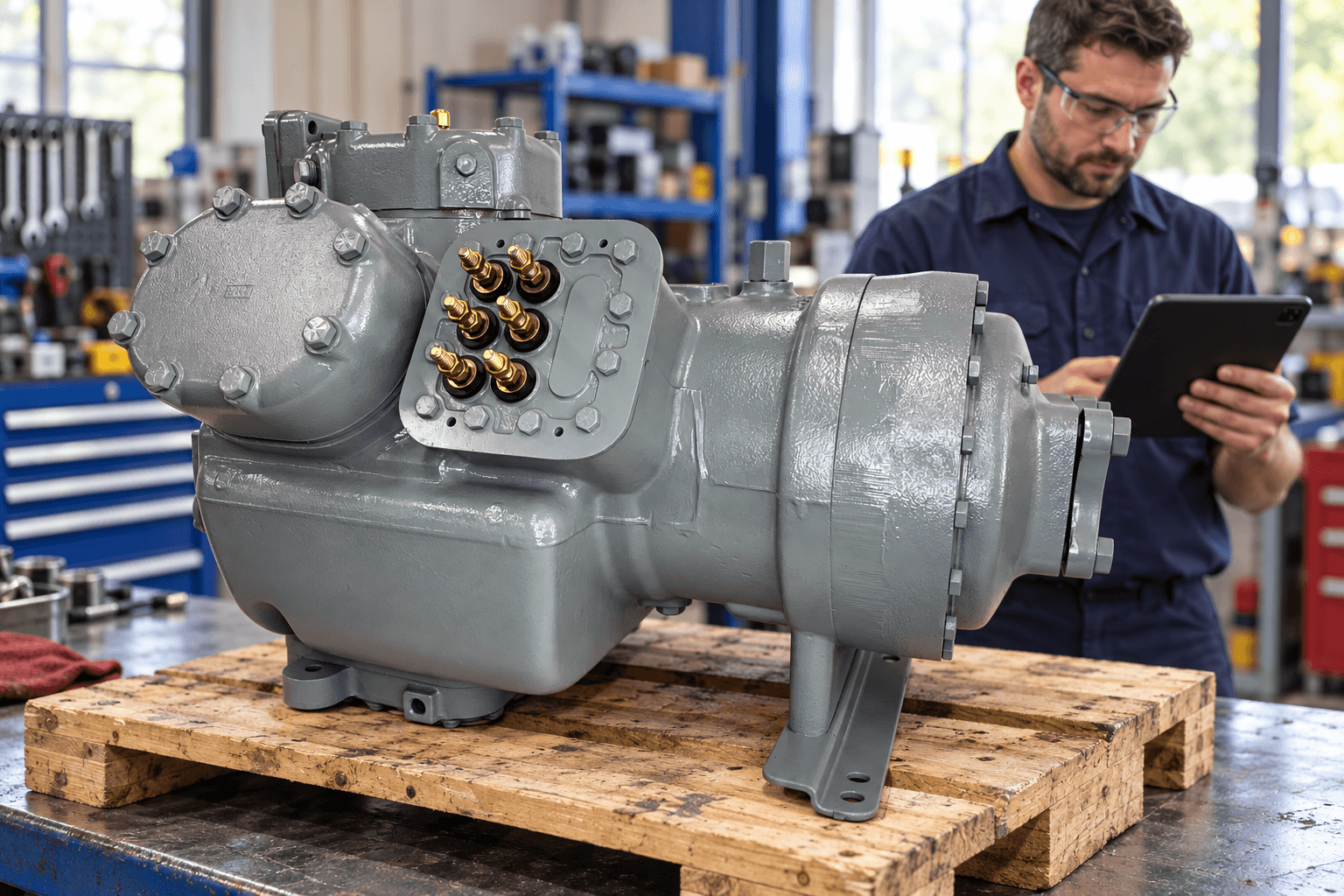
Ordering a Carrier 06D or 06E replacement takes more than matching the compressor family. Learn what to verify about unloading methods, capacity stages, control voltage, included components, and startup checks so the replacement supports the equipment’s intended operation.
A replacement HVAC/R commercial compressor can match the equipment’s electrical requirements and still arrive without the unloading arrangement the system needs. That detail is easy to overlook when the immediate concern is getting a chiller, rooftop unit, or refrigeration system running again. Before ordering a Carrier 06D or 06E compressor replacement, confirm the existing compressor's control capacity and what the replacement must include.
Key checks include the unloading method, the number of controlled cylinder banks, the control type, and the components supplied with the replacement. The complete compressor model number is the starting point. Photographs, equipment documentation, and a clear description of the existing controls help the remanufacturer verify the configuration rather than relying on the family name alone.
Why the Compressor Family Does Not Tell the Whole Story
“Carrier 06E” identifies a family, not one interchangeable compressor. Carlyle’s 06D specifications and 06E specifications show variations in displacement, cylinder count, and temperature duty within those families. A replacement decision therefore needs more information than horsepower or the first few characters on the nameplate.
Start with the full model and serial numbers from both the compressor and the equipment it serves. Include the refrigerant, electrical supply, application, and any known changes made during previous repairs. If someone replaced a cylinder head or modified the controls years ago, the original equipment record may not describe everything currently installed.
When reviewing remanufactured Carrier compressors, treat the listing as the beginning of the selection process. Have the supplier confirm the complete replacement configuration against jobsite information.
Identify the Unloading Method and the Control Type Separately
Unloading reduces a compressor’s pumping capacity while the motor continues running. For an equipped 06D or 06E, the important distinction is between the mechanism that unloads the cylinders and the control that tells it when to act. Those are related, but they are not the same specification.
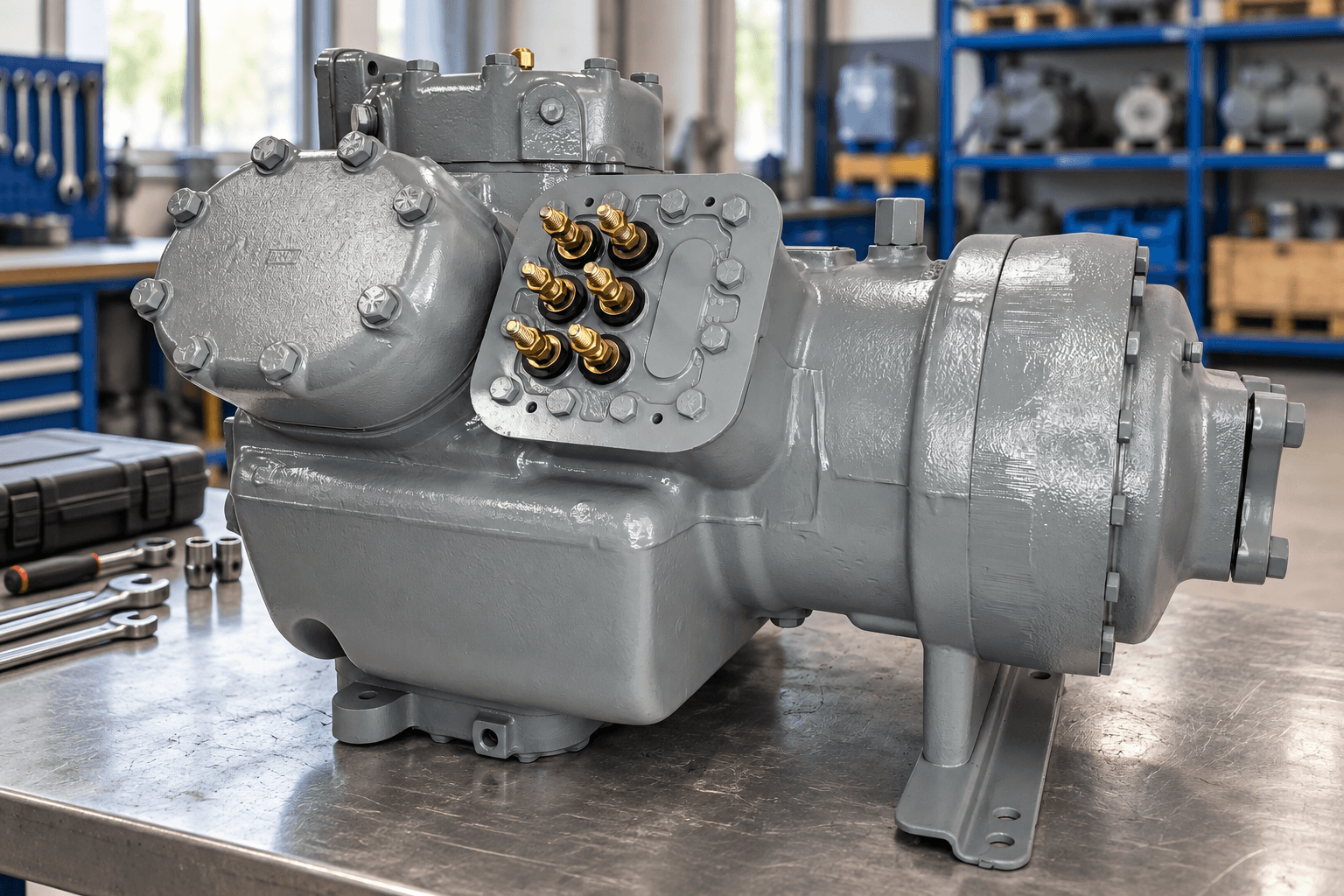
Carrier documentation describes both suction cutoff and hot gas bypass cylinder unloading arrangements. It also identifies pressure-operated and electrically operated capacity controls. Calling an assembly an “electric unloader” does not, by itself, identify the unloading method or establish which head and internal components it requires.
Document both details before ordering. Take clear photographs of the cylinder heads, control valves, coil labels where present, and associated wiring. Compare those observations with the manufacturer’s instructions for the exact assembly. If the arrangement is unclear, send the information to the remanufacturer for confirmation before removing any parts.
Confirm the Required Capacity Steps
Ask how many cylinder banks the existing system controls and what operating stages the equipment expects. A compressor that can run at full capacity is not necessarily configured to provide the same reduced-capacity operation as the unit being removed. The replacement needs to work with the equipment’s intended sequence.
This matters when the system operates under changing loads. Consider a unit that appears to perform normally during a high-load startup check. If you never verified its reduced-capacity stages, that initial check won't show whether the controls work properly when demand falls. Testing should address the intended operating sequence, not simply whether the compressor starts.
Do not assign a capacity percentage based only on the number of visible heads or the label “06D” or “06E.” Have the required stages confirmed against the specific compressor and equipment documentation. If you propose a different arrangement, confirm its compatibility before treating it as a replacement option.
Find Out What Comes With the Replacement
Ask the remanufacturer to describe the supplied unloading configuration in writing. Determine whether the order includes the required control valves and solenoid coils, whether any positions are plugged, and whether approved components must be transferred or ordered separately. Include these details on the quote or order confirmation so the installing technician can review them.
Carrier’s service documentation includes examples of compressors supplied with plugged unloading positions that operate fully loaded as received. This is why a mounting location or unloader-capable head should not be taken as proof that the delivered assembly is ready for the system’s existing capacity controls.
Confirm the correct assembly for the job rather than assuming a compressor purchase includes every valve, coil, or head component. Ask about any additional parts before scheduling the installation.
Check Control Voltage and Operating Logic
For an electrically operated unloader, verify the coil’s rated voltage separately from the compressor motor supply. Record the coil identification and compare it with the equipment wiring diagram. The voltage feeding the compressor motor does not establish what the unloader control circuit requires.
The technician should also confirm what happens when the control signal changes. Check the specified energized and de-energized states for the exact valve and control arrangement. Verify the controller command and the mechanical response at the compressor separately.
For pressure-operated controls, review the applicable settings and application requirements using the correct instructions. Avoid copying settings from a different installation simply because it uses the same compressor family. Carlyle provides application guides and capacity-control instructions through its manufacturer literature page.
Decide Which Existing Components Can Be Reused
Document the decision to reuse an existing component based on compatibility and condition. Before transferring a valve, coil, or other accessory, confirm it belongs in the replacement configuration and determine whether it caused the original problem. Moving an unresolved control fault to the replacement can leave the technician facing the same complaint after startup.
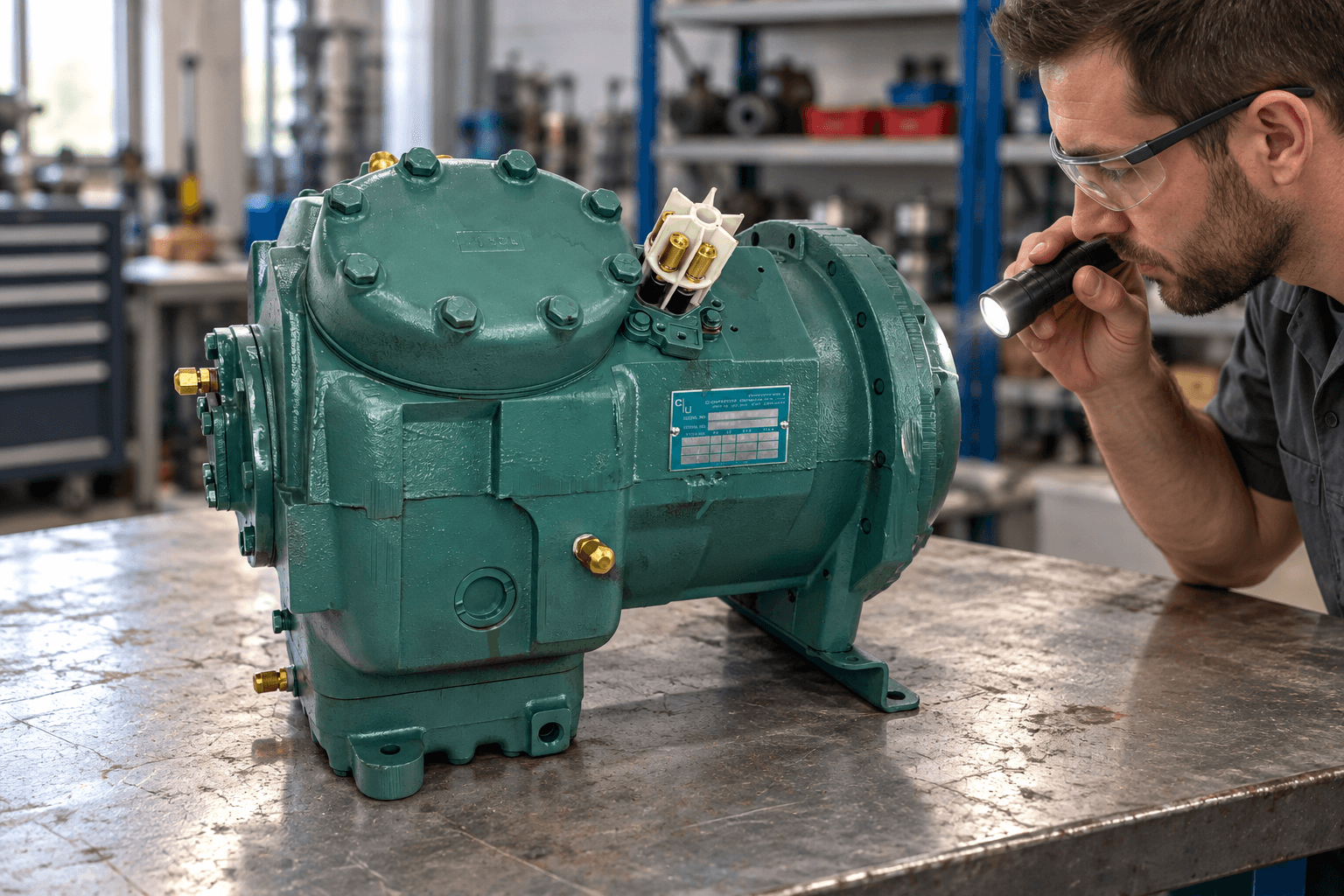
For example, a compressor that didn't respond to a capacity command deserves more investigation than a note saying “not cooling properly.” Record what the controller requested, what the technician observed, and which checks were completed. That information helps distinguish an unresolved control issue from the reason the compressor itself was condemned.
Internal changes require the correct manufacturer-approved parts and procedures. Keep the replacement process focused on a verified configuration rather than assembling parts that happen to fit. Questions about conversions or changes to unloading methods should be resolved before the installation begins.
Verify Loading and Unloading During Startup
Once the compressor is installed and the required startup procedures are complete, verify each intended capacity stage using the equipment manufacturer’s commissioning procedure. A successful motor start is only one part of the check. The technician also needs to establish whether the compressor responds correctly as the controls request changes.
Record the commanded stage alongside operating observations, including pressures, temperatures, motor current, and oil-system checks required for that application. Interpret those readings together and under the test conditions specified by the manufacturer. A change in one reading alone should not be treated as proof that the entire unloading sequence is correct.
Save the final configuration, relevant part numbers, control settings, and commissioning results with the service record. That gives the next technician a useful reference and helps the facility distinguish a new operating problem from an undocumented installation detail.
Order With the Unloading Details Already Confirmed
The most useful replacement request includes more than a photograph of the commercial HVAC/R compressor nameplate. Send the equipment identification, application details, unloading-head photographs, control information, and a clear description of which components are needed. Ask the remanufacturer to identify anything that still needs confirmation before the order is approved.
If you are planning a Carrier 06D or 06E commercial HVAC/R compressor replacement, contact Compressors Unlimited with that information. Confirming the unloading configuration before shipment helps the installing contractor arrive with a replacement and supporting components matched to the job.